
Carved brackets over the front door of a Victorian rowhouse on the South Side.


This is certainly one of old Pa Pitt’s most esoteric subjects. In rowhouse neighborhoods, there are often tunnel-like passages through to the rear yard of a house, with the upper storeys built over the passage. These outdoor passages are called “breezeways” in Pittsburgh; in other cities they may be called gangways or alleys. Sometimes the passage runs through one house; sometimes it is shared by two houses. We see examples of both in this little collection.


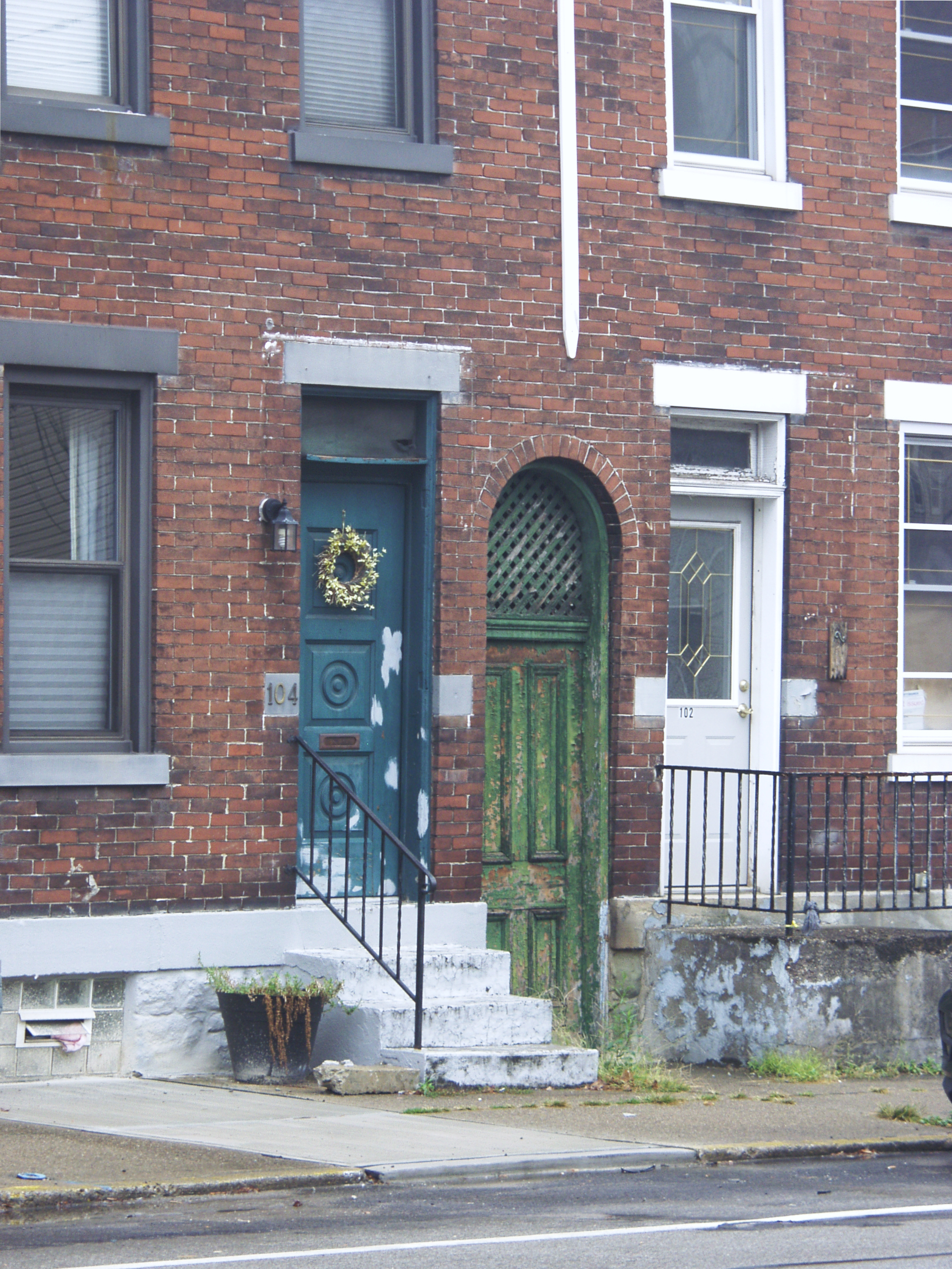


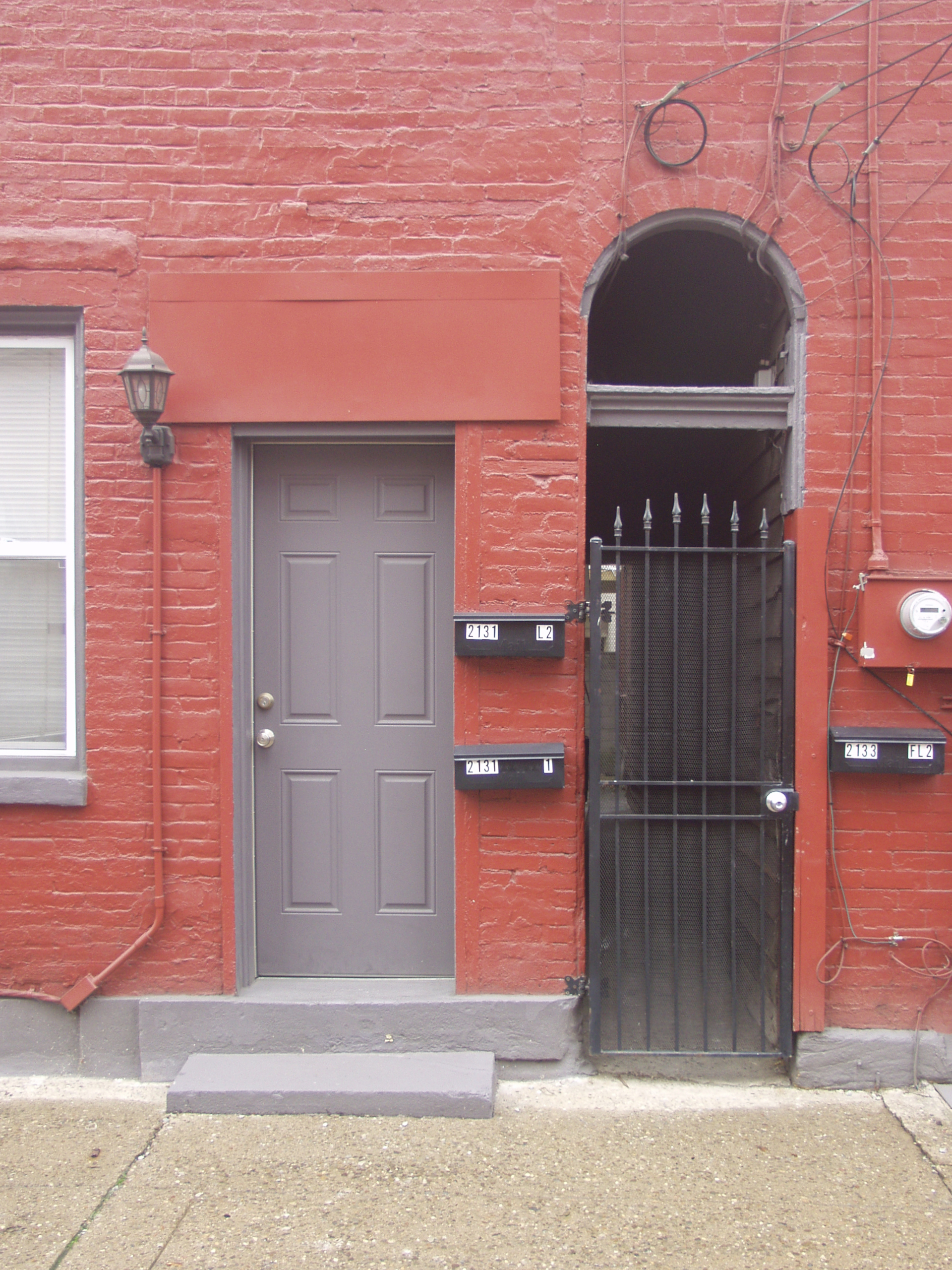


The famous Victorian front doors of the South Side are featured on posters and in picture books on coffee tables all over western Pennsylvania. There is an endless variety to the woodwork on these South Side rowhouses. Old Pa Pitt was out walking on the South Side and decided to concentrate on doors: here is the collection he made in just half an hour’s stroll. Click on any picture to enlarge it.
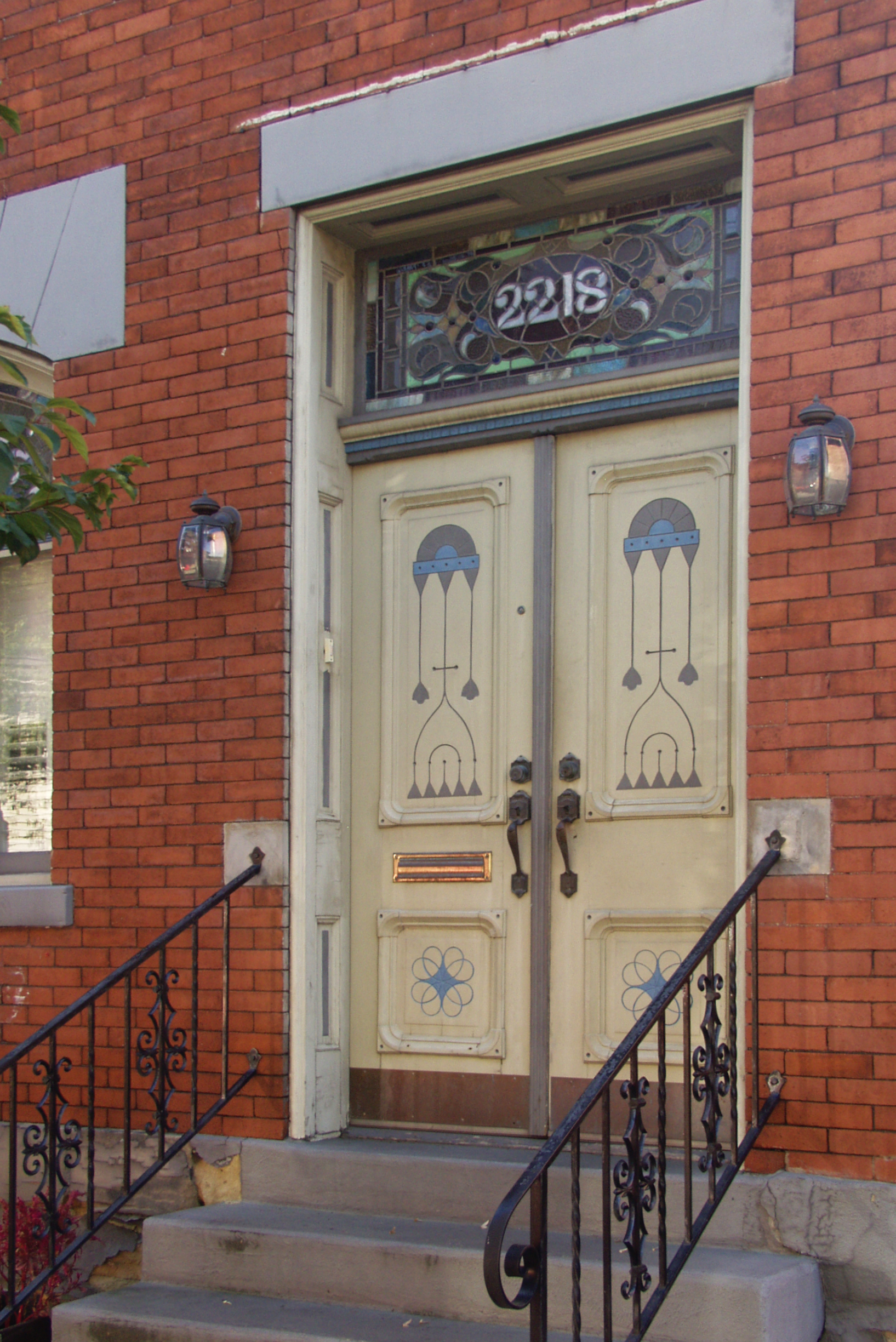


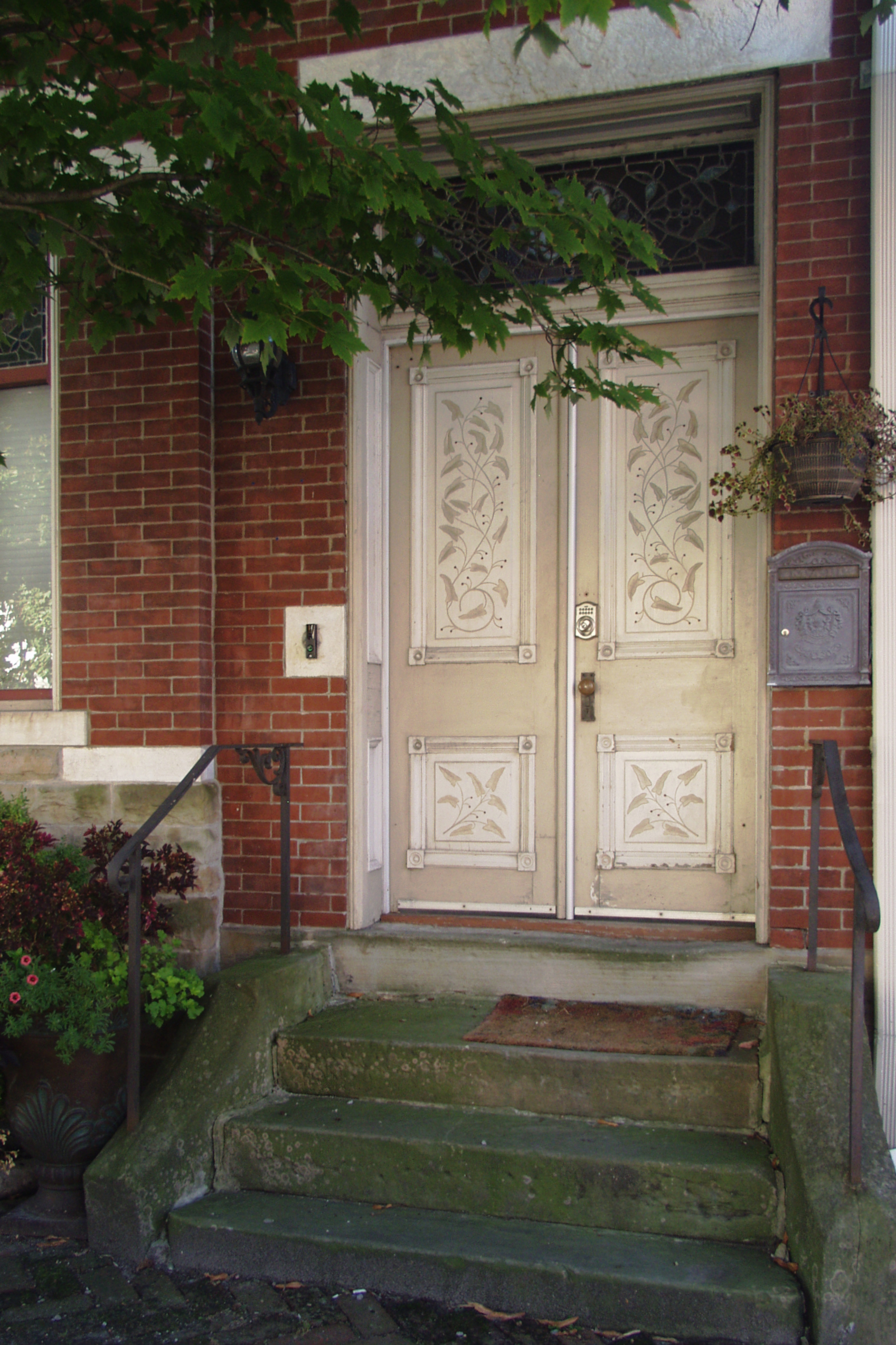

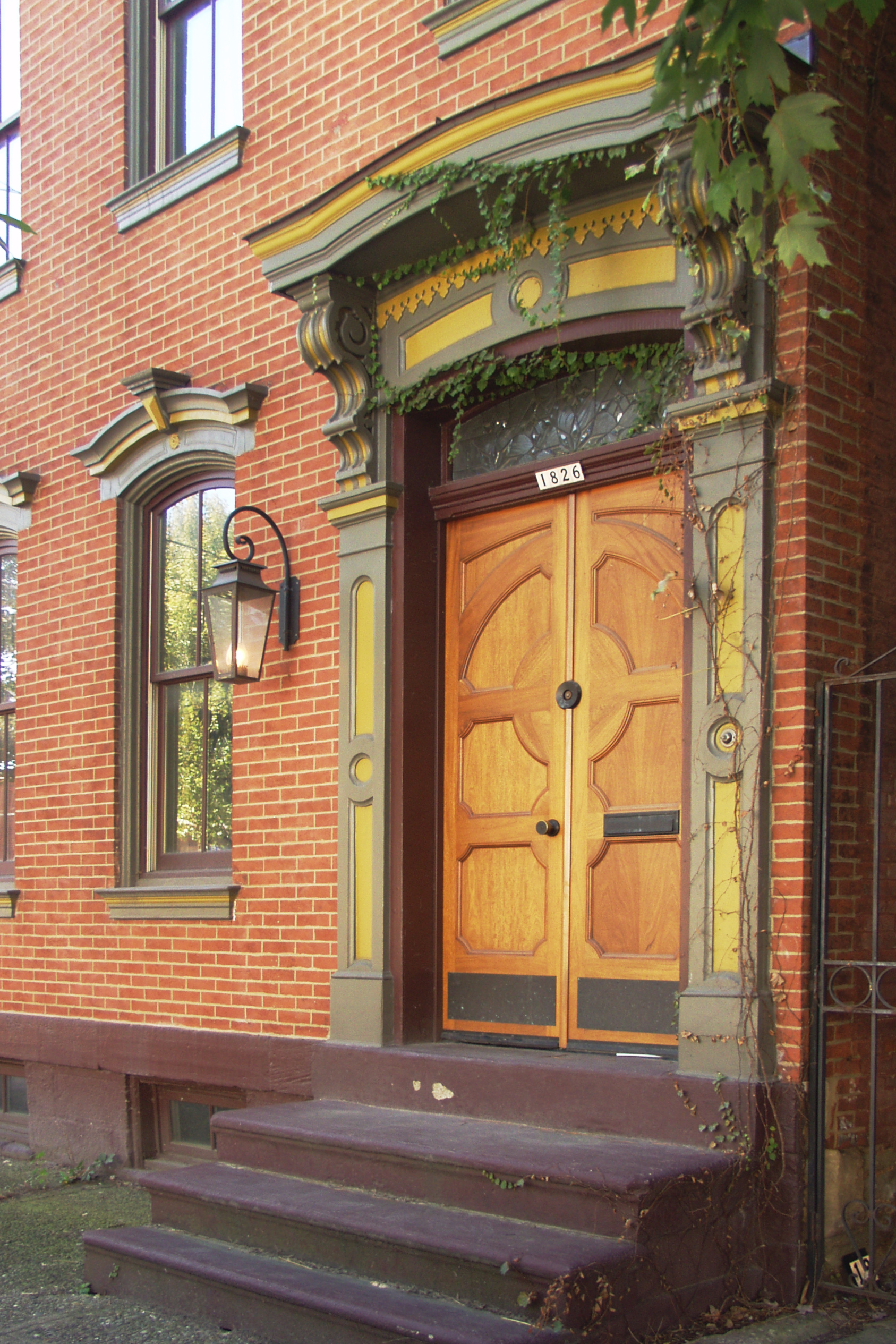

Many of these doorways have decorative stained-glass transoms over the door, often with the address worked into the glass:


Of course, no collection of South Side front doors would be complete without a Kool Vent awning on an alley house:

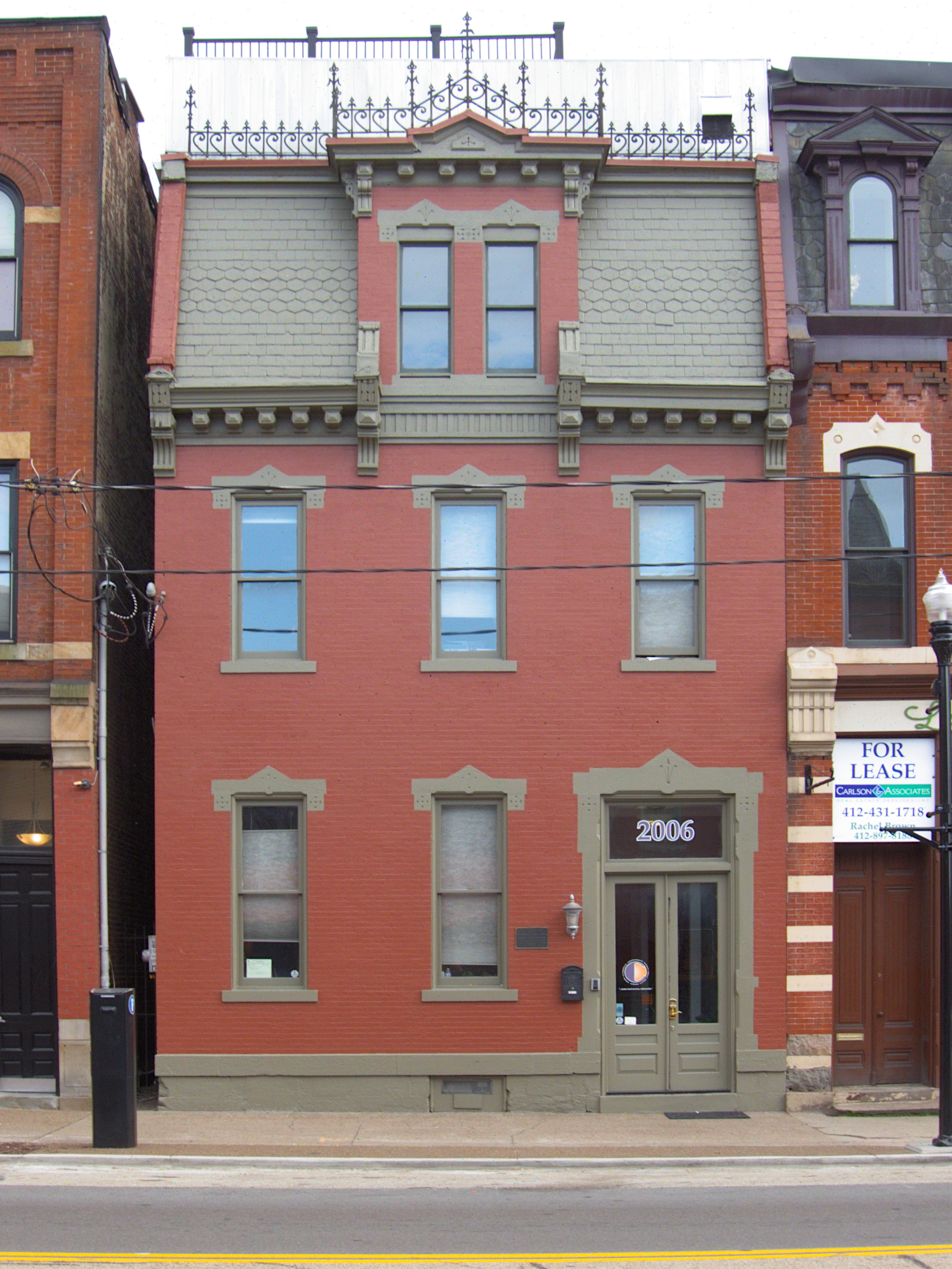
Carson Street is the commercial spine of the South Side, but occasionally we run across a house left over from the time before Carson was almost exclusively commercial. Most of them have small offices on the ground floors now, but they retain their domestic external appearance. This house strikes Father Pitt as a halfway point between Second Empire and Italianate styles in local rowhouses; it’s notable for its prickly decorative ironwork on the roof.

Built in 1884, this was originally a mansion designed by the prolific and always tasteful firm of Longfellow, Alden & Harlow. It was a gift from his wife to the pastor of the Bellefield Presbyterian Church across the street. It pays to marry a millionaire’s daughter.
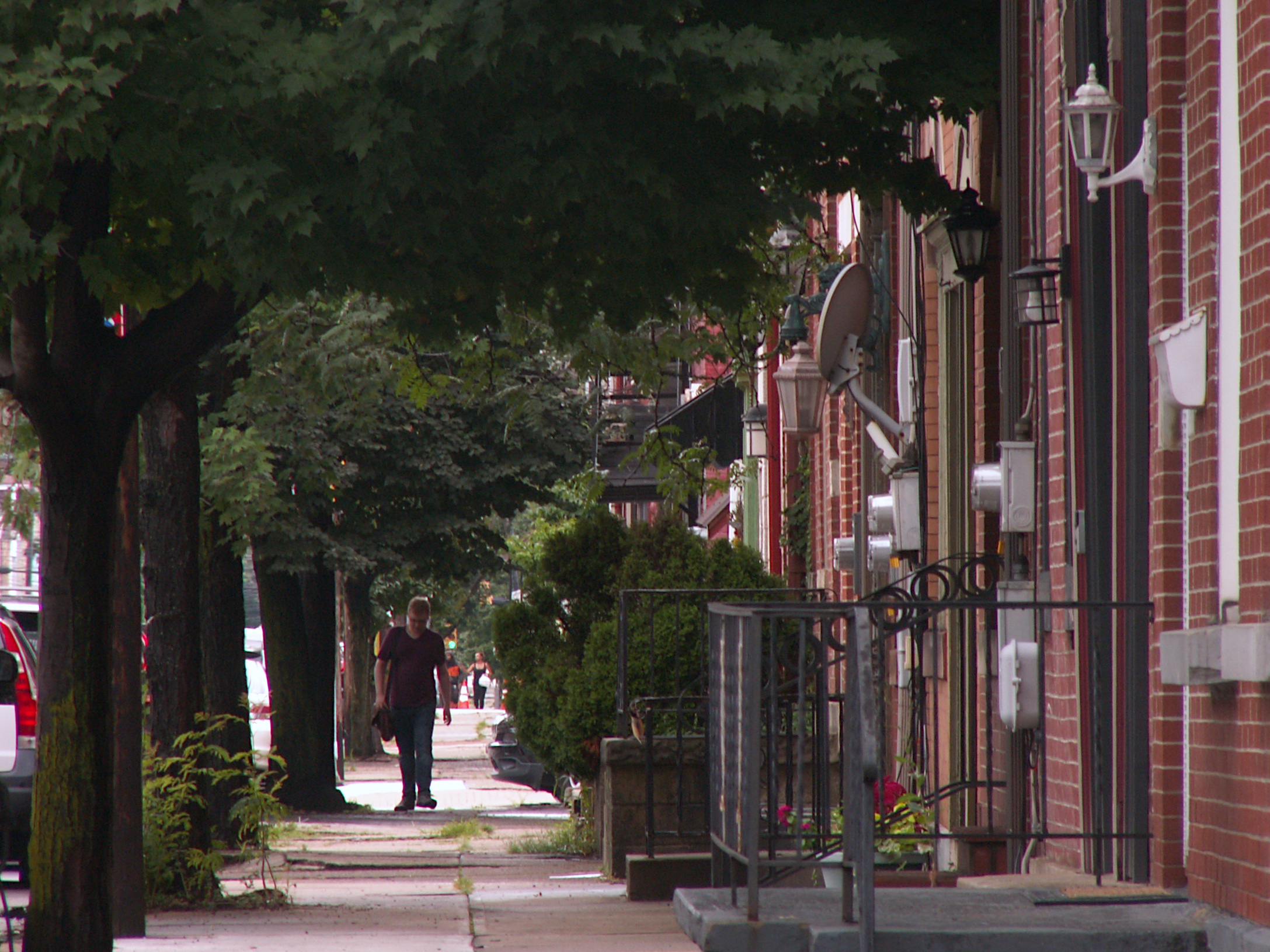
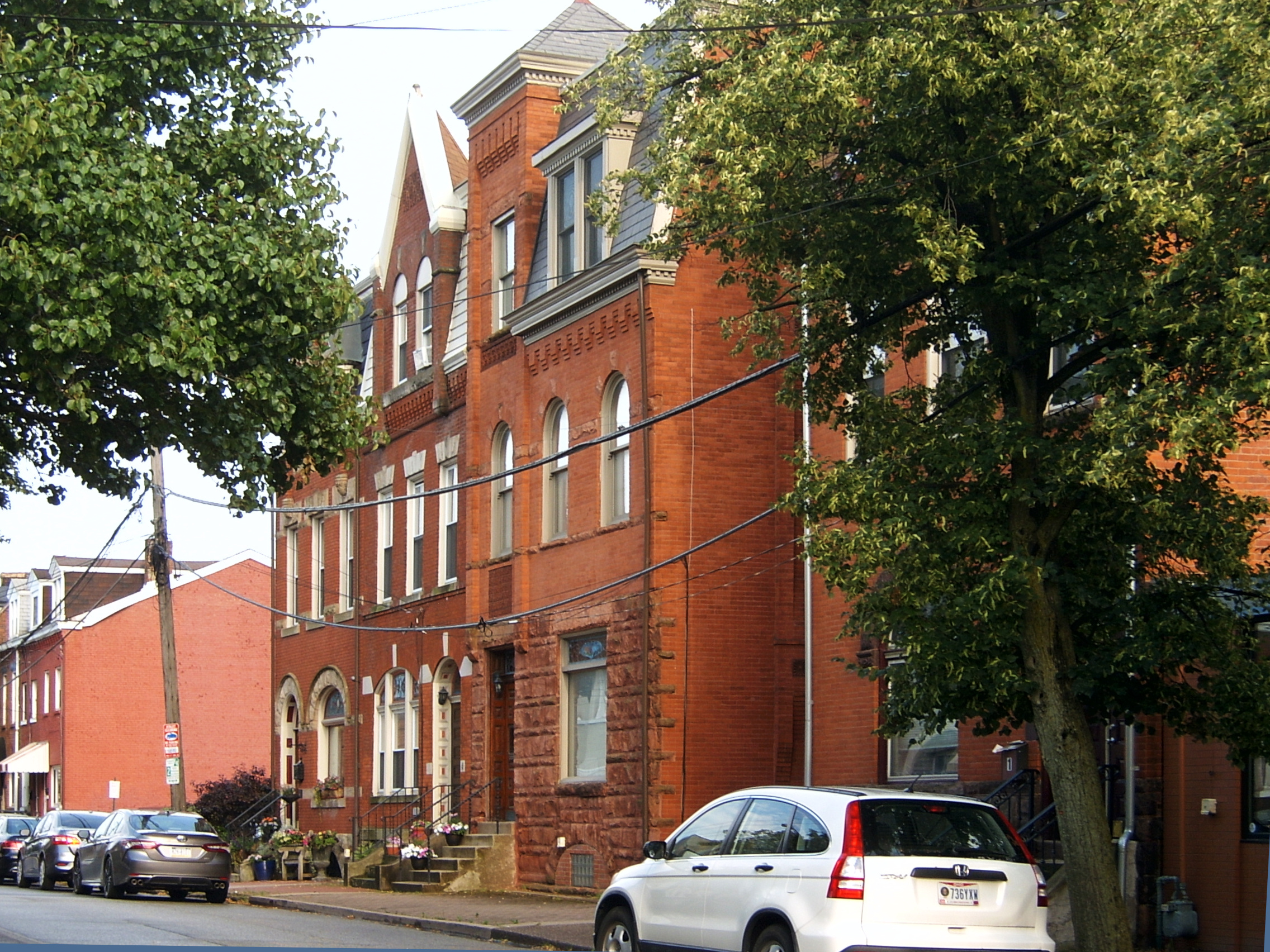
Sarah Street is the most splendid residential street in the New Birmingham section of the South Side—the part from 17th Street eastward that was developed after the Civil War. “Splendid” is relative, of course: even the richest parts of the South Side were not millionaires’ neighborhoods. But there are many fine and substantial Victorian rowhouses on Sarah.

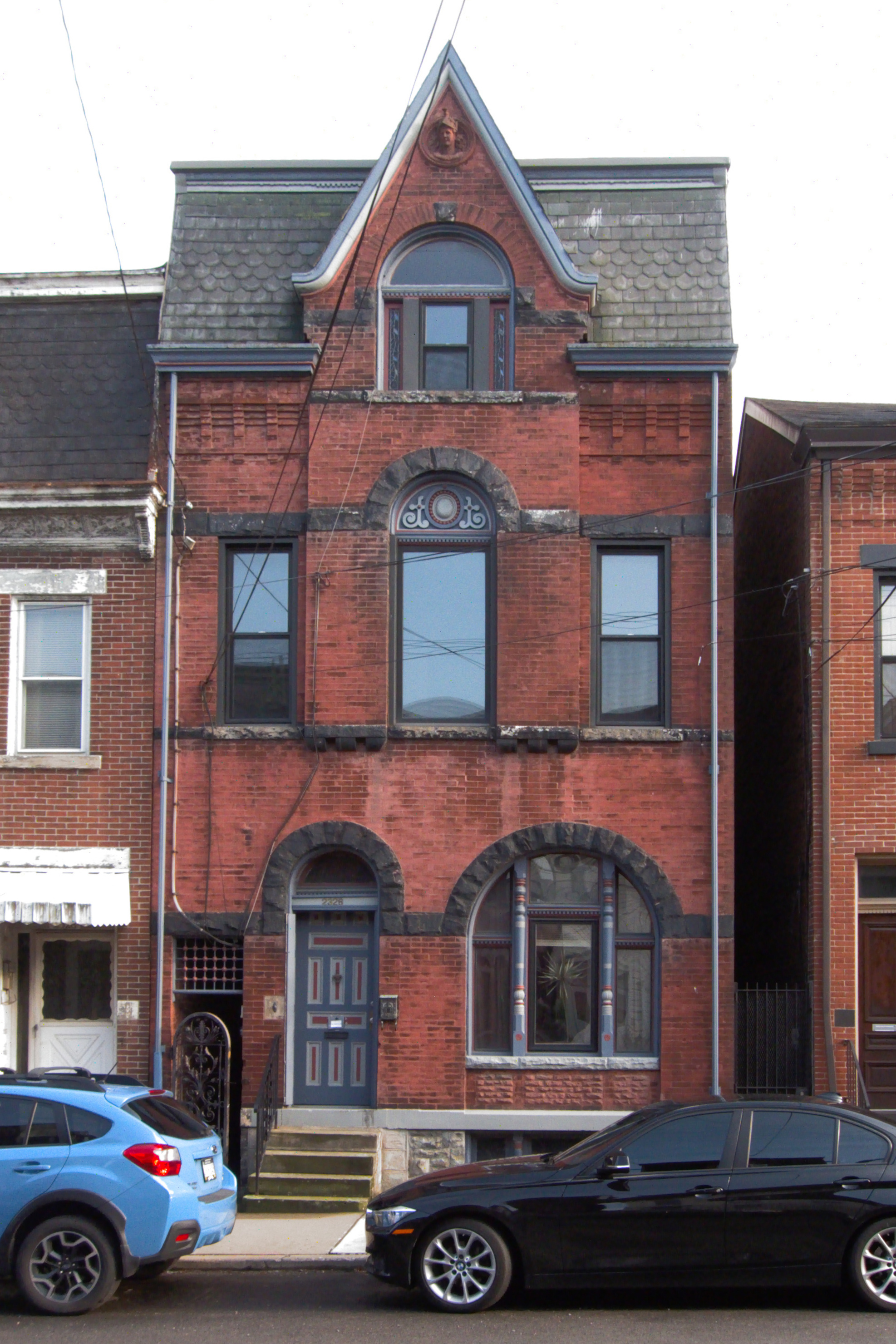

Although Carson Street is the commercial spine of the South Side, commercial buildings also sprouted on the back streets, and Sarah Street has some good Victorian commercial architecture. Some of the buildings are still backstreet bars or stores; others have had their ground floors turned into apartments.


The South Side Slopes are a vertiginous neighborhood of narrow streets crowded with little frame houses. Traditionally the neighborhood was mostly German Catholic, whereas the flats below were mostly East European. Above, we see the Slopes from the intersection of Sidney Street and 27th; below, a view from 24th Street that includes the back of the old St. Josaphat’s church.


This row of attractive houses is on the west side of 24th Street at the corner of Sidney. Note the arched windows: Richardsonian Romanesque was popular, and filtered down even to this level of domestic architecture.
Camera: Samsung Digimax V4