

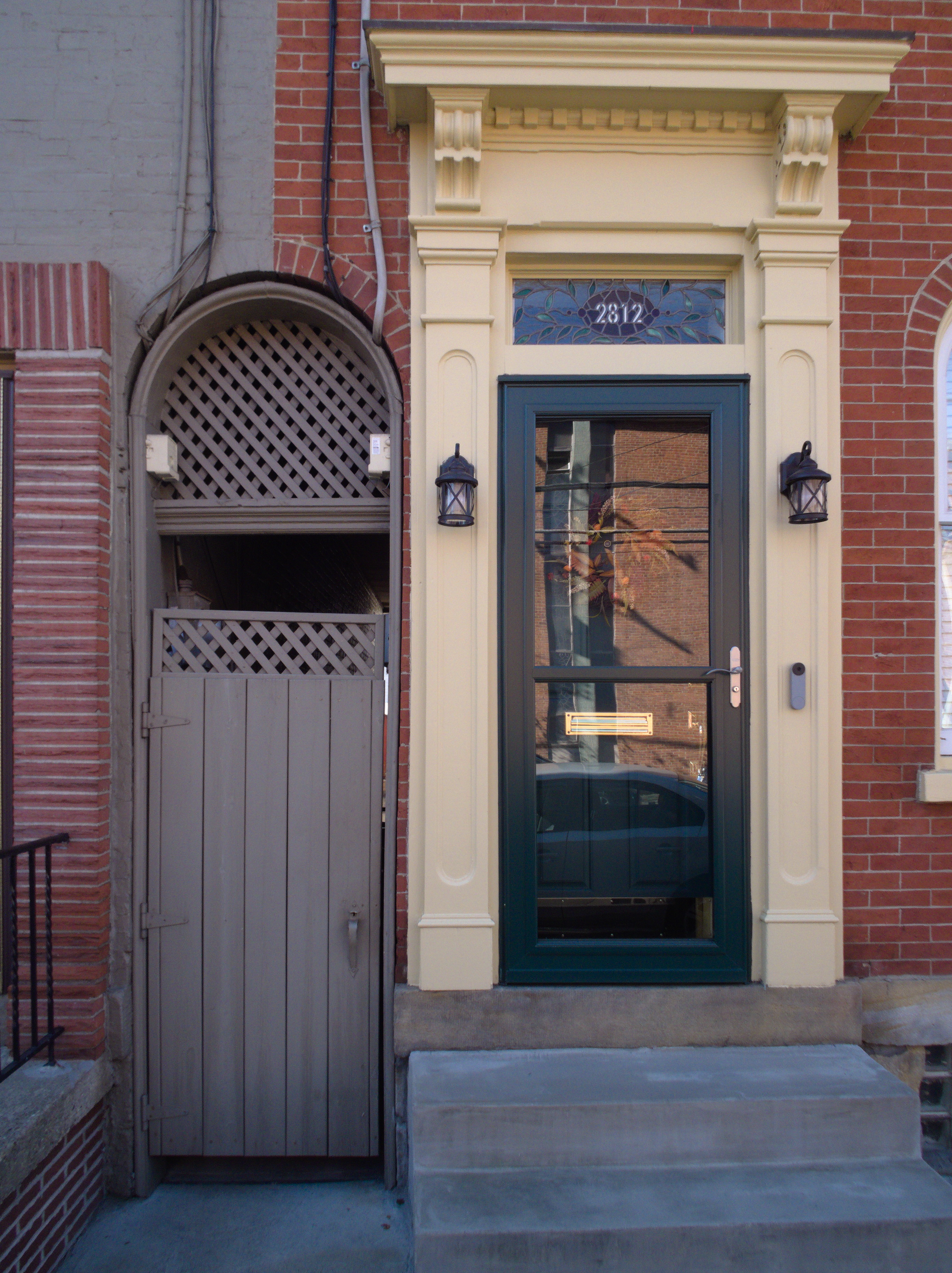
A pair of rowhouses whose elaborate Italianate details have been meticulously restored. And since, as longtime readers know, old Pa Pitt collects breezeways…

Comments
A pair of rowhouses whose elaborate Italianate details have been meticulously restored. And since, as longtime readers know, old Pa Pitt collects breezeways…

On a street of mostly small vernacular rowhouses, this pair of grand Second Empire houses dominates the streetscape. They are well preserved and well cared for, and we need no more excuse to appreciate the details.

This front entrance (could you guess that the picture was taken the day after Halloween?) bears an unusual memento of the original owner of the house:

Note the monogram on the side of the steps. An 1890 map shows that the house belonged to a Jonathan Seibert.

Note the exceptionally elaborate door on the breezeway.
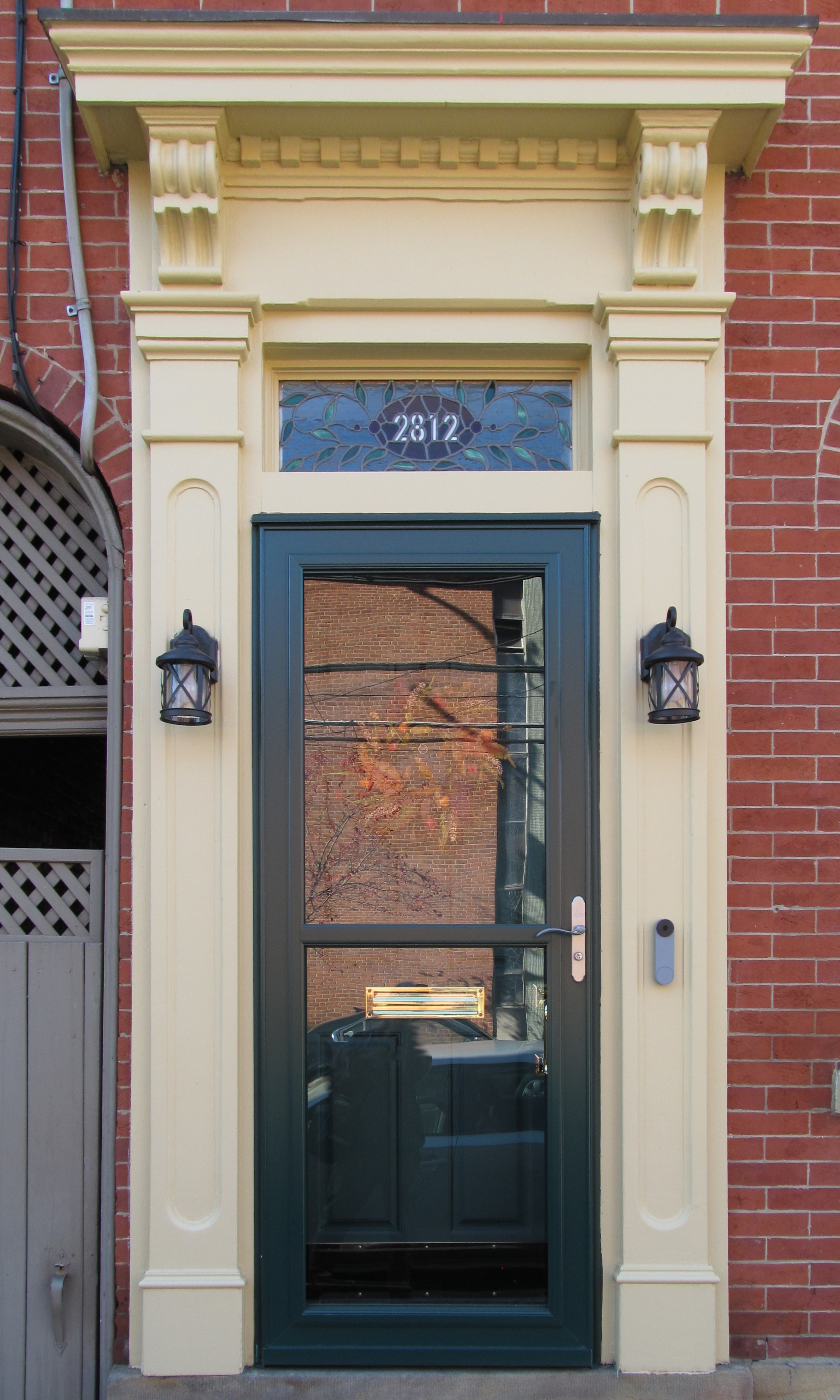
More of the front doors, with their charming woodwork, and the mysterious breezeways (which are not much of a mystery) of the South Side.



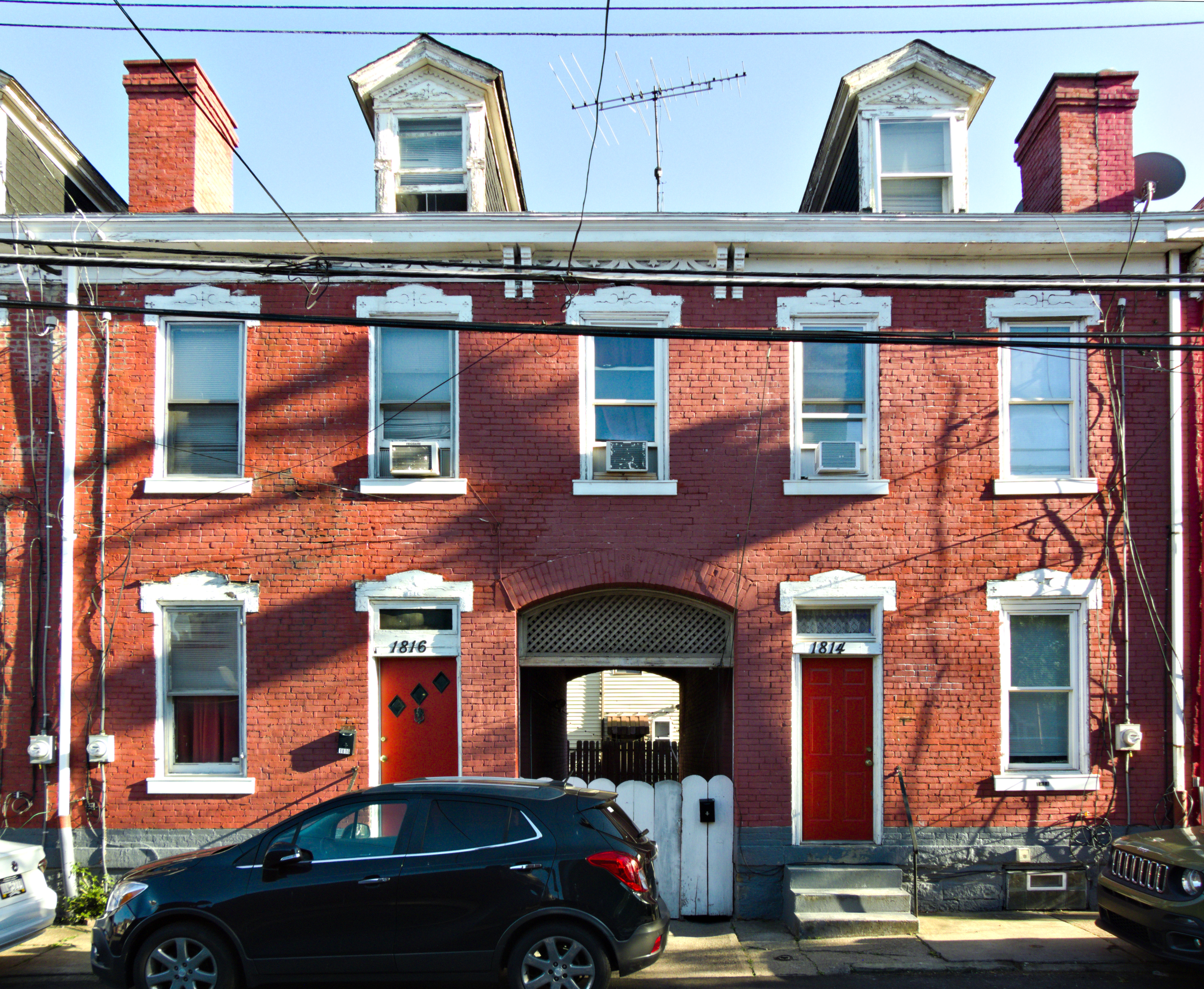
In Pittsburgh, a “rowhouse” is generally any house that shares a wall with its neighbors. But there are rowhouses in a stricter sense: rows of houses built all at once, as more or less one building divided into individual residences. One such row is in the 1800 block of Carey Way, a row of modest Italianate alley houses all put up at once. If he had to guess, old Pa Pitt would date it to the 1870s. One of its remarkable features is its breezeway. Most breezeways in Pittsburgh are narrow passages between houses, but this row has one breezeway in the middle big enough to drive a wagon through. That is probably the point: it leads to a courtyard from which deliveries of coal and other staples could be made to the backs of all the houses. Under separate ownership, the houses have ceased to be entirely identical, but their common origin is still apparent.


You might have thought one dose of breezeways would have been enough for such an esoteric subject, but you would have been mistaken. With his usual monomania, Father Pitt is building up a large collection of South Side breezeways, with plans to expand the collection into other neighborhoods soon.




Sometimes curious accidents happen to breezeways. For example:

This appears to be half a breezeway: the house on the left has been much altered, with its half of the shared breezeway filled in.

Here is a shared breezeway that has lost one of its houses, so that it has now become a curious lean-to construction on the side of the remaining house.

This is certainly one of old Pa Pitt’s most esoteric subjects. In rowhouse neighborhoods, there are often tunnel-like passages through to the rear yard of a house, with the upper storeys built over the passage. These outdoor passages are called “breezeways” in Pittsburgh; in other cities they may be called gangways or alleys. Sometimes the passage runs through one house; sometimes it is shared by two houses. We see examples of both in this little collection.


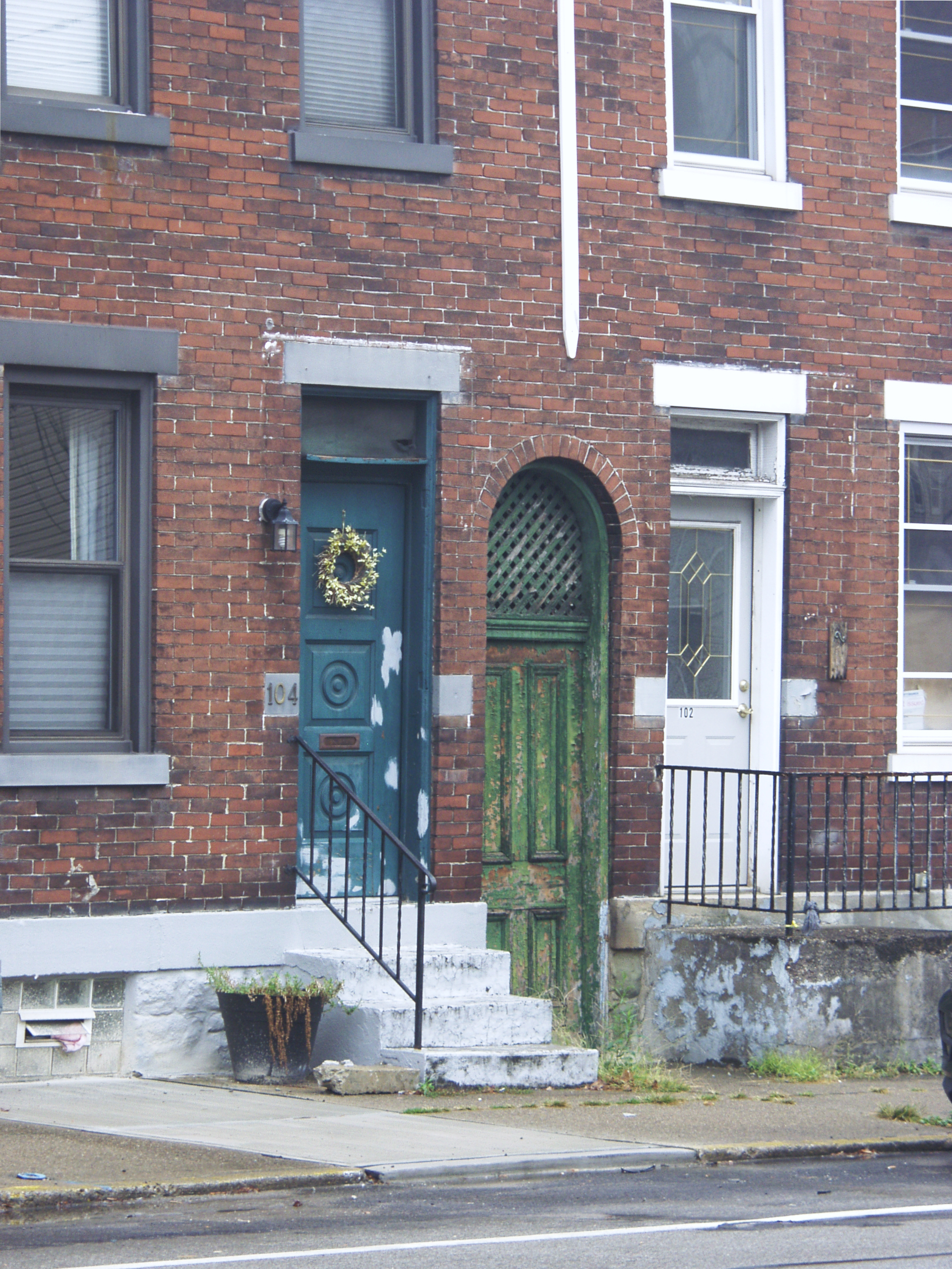


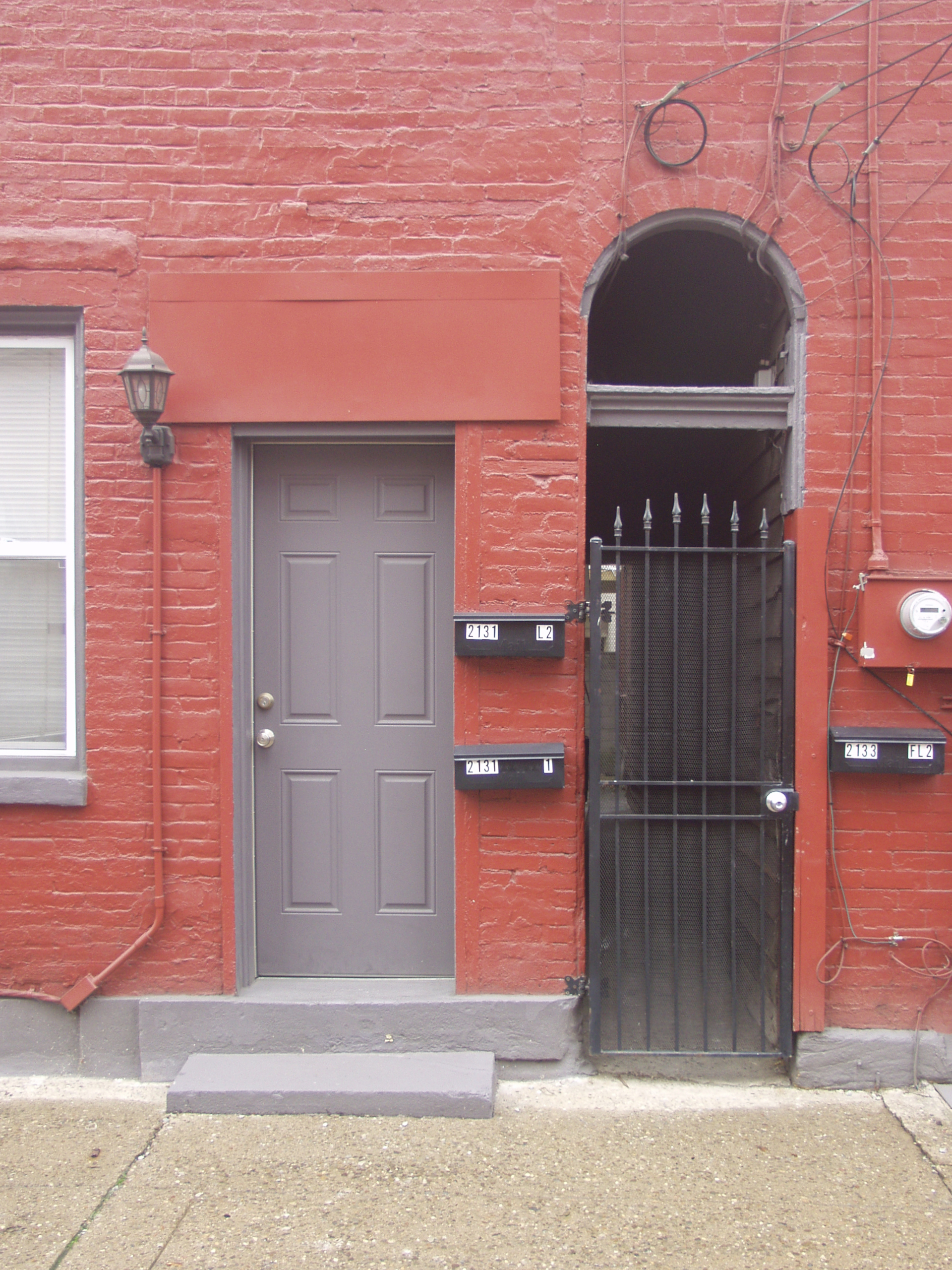


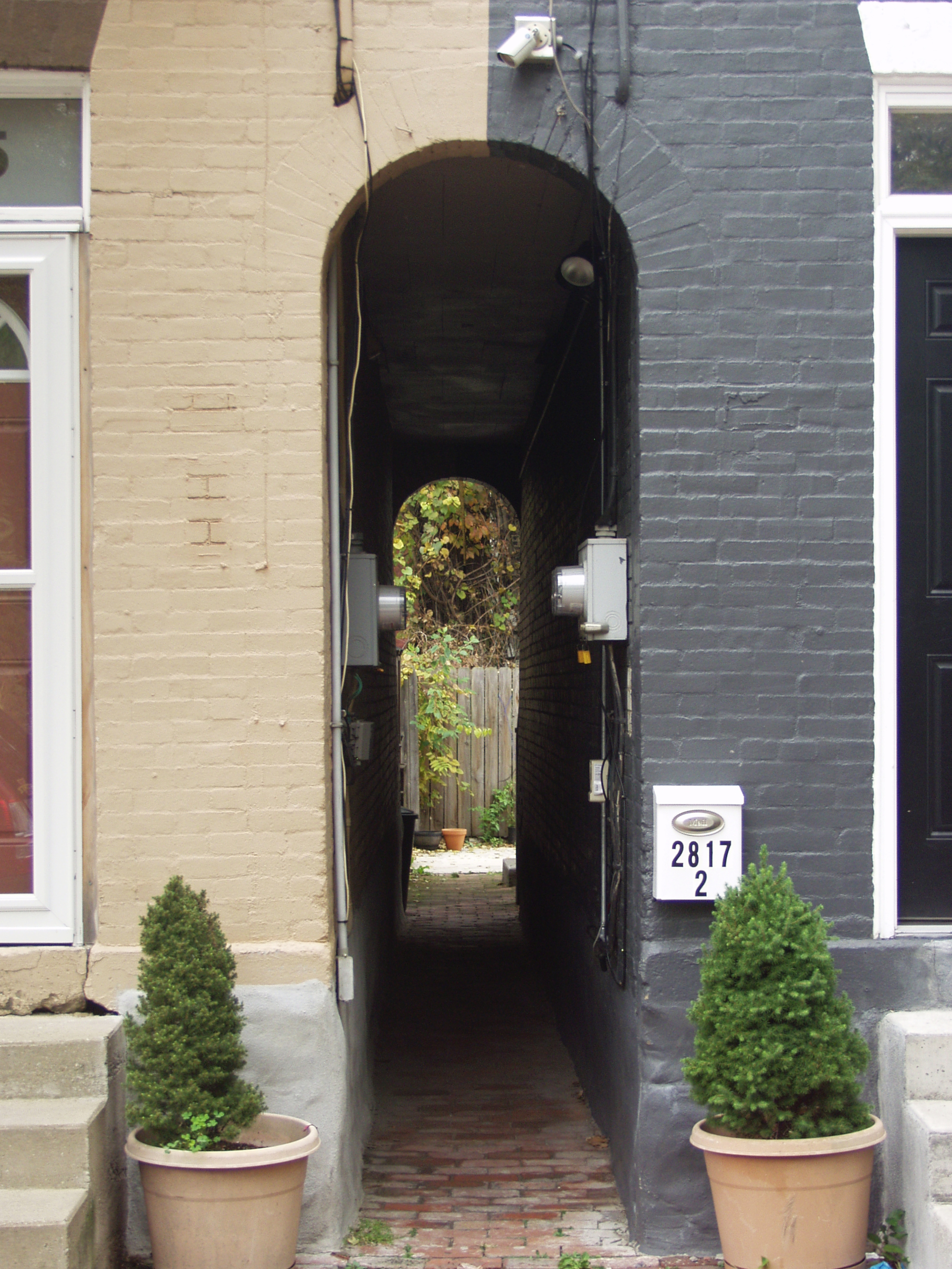
Often in Pittsburgh rowhouse neighborhoods there are narrow, tunnel-like passages between the houses that run from the street into the back yards. This one struck old Pa Pitt as especially picturesque and a bit mysterious.
Camera: Canon PowerShot A590 IS.