Henry Hornbostel had designed the campus of Carnegie Tech, and he taught architecture there, so he was the natural choice when the institution’s first president, Arthur A. Hamerschlag, decided to build a house nearby in Schenley Farms. The result, as you might expect from Hornbostel, was something unique—modern but not modernistic, picturesque but not gaudy, eclectic but harmonious. It sits on a ledge, following the terrain with its unusual obtuse angle, and therefore was known as Ledge House.
Built in 1913, this house is a minor landmark of early modernism in Pittsburgh. Kiehnel & Elliott were the architects, and Richard Kiehnel had a thoroughly German architectural education. He applied the latest Jugendstil ideas of decoration, with a little Prairie Style thrown in, to the forms that were popular in Pittsburgh—like the standard three-storey Renaissance palace that is the basis of this house. The combination was a winner: clients got something that looked bracingly up to date, but didn’t make their neighbors hate them.
Snow and icicles make every house more picturesque, and Schenley Farms is a neighborhood full of picturesque houses in any weather. Old Pa Pitt is willing to trudge through the snowdrifts so you can enjoy the beauty while sitting in front of a warm screen. Because of the hard work of an anonymous Google Maps user who gave us a map of Architects of Schenley Farms Residences, we can tell you who designed most of these houses.
We begin with one of the first houses built in the Schenley Farms plan, designed for the developers by MacClure & Spahr to attract upscale buyers to the new development. (It is also sometimes attributed to Vrydaugh & Wolfe, but our source tells us that was an error.)
This one, built in 1907, was designed by Edward Stotz.
Mr. Stotz was comfortable in many styles, but seems to have loved the classical style most of all. In this house, he uses very traditional classical ornaments—Greek key around the window and egg-and-dart along the cornice—to create a surprisingly modernistic effect.
This is one of the few mysteries in Schenley Farms: it was built by developer John H. Elder for himself, but we have not yet found the name of an architect. It is possible that Mr. Elder designed the house himself. It is a fine house, but to Father Pitt’s eyes there is something unattractively artificial-looking about the stonework.
Built in 1912; the architects were D. Simpson & Co.
Here is another one, built in 1920, whose architect we have not yet found.
Paul W. Irwin designed this Georgian mansion, built in 1921.
The firm of Alden & Harlow designed this one, built in 1922. Alden was dead by that time, but his name remained at the head of the firm. Much of the design work in the 1920s was done by Howard K. Jones.
This house was designed for Dr. A. Aiello by Casimir Pellegrini, who would go on to be one of the more important local architects of the middle twentieth century.
Another MacClure & Spahr house designed for the Schenley Farms Company early in the development of the plan.
Louis Stevens was best known as a designer of romantic châteaux and French cottages for the well-to-do, but if you asked him for a Renaissance palace, he was up to the task. The Harry J. Parker house was built in 1915 on a prominent corner where Bayard Street meets Bigelow Boulevard, and it is a standout in a neighborhood of splendid houses.
For their client Godfrey Stengel, Kiehnel & Elliott took the basic form of a typical Pittsburgh Renaissance palace, which gave them a box to work with—Richard Kiehnel’s favorite shape. To that canvas the architects applied their trademark Jugendstil-infiltrated-by-Prairie-school decorations. The house was built in 1913, and it must have looked very modern—yet it fits perfectly in Schenley Farms, where other more traditional Renaissance palaces have almost the same shape without the Jugendstil.
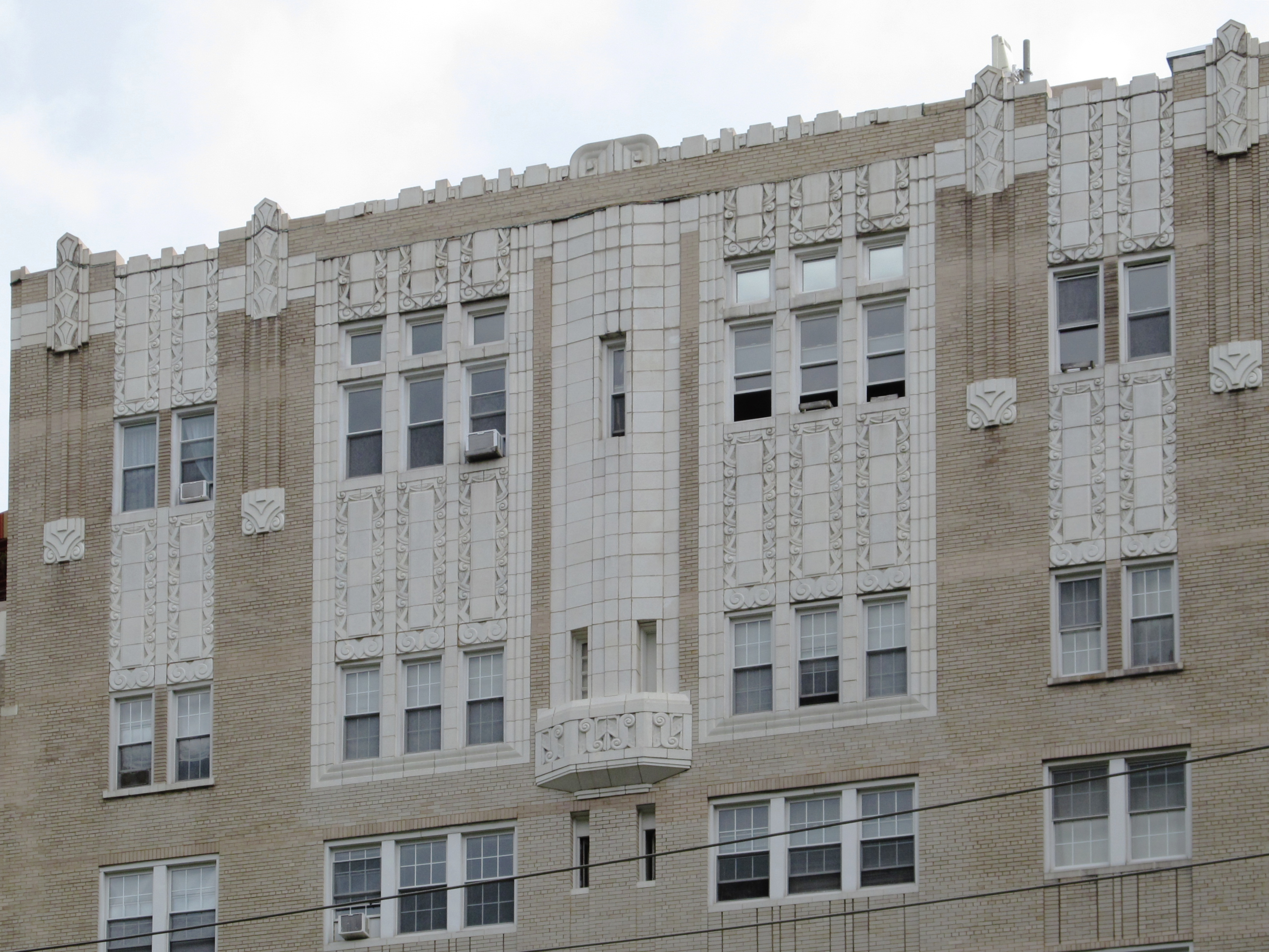
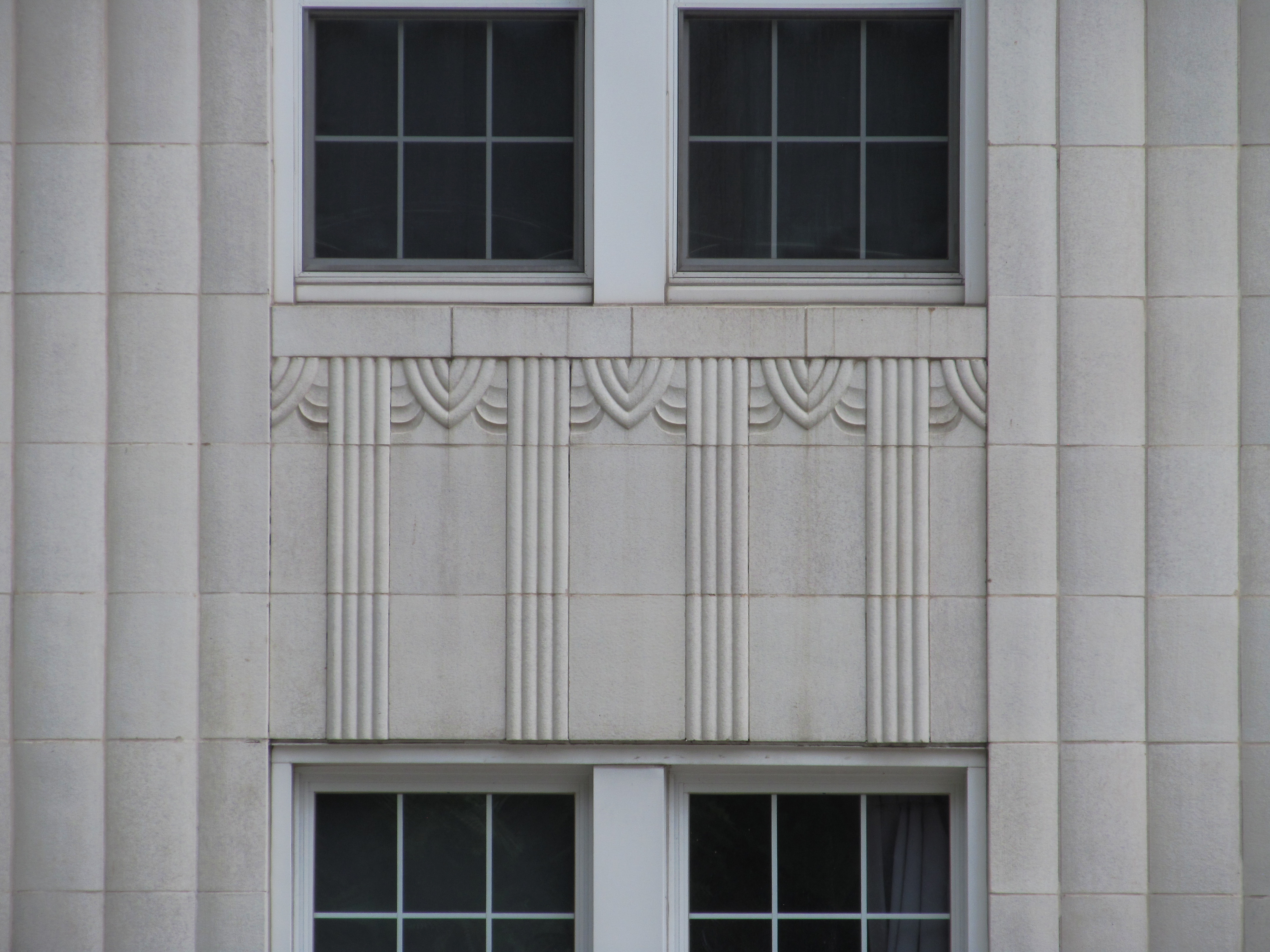
This splendid apartment house on Bigelow Boulevard is a feast of Art Deco details; in fact, in a city that never adopted Art Deco as enthusiastically as many of its rivals, this is one of the most remarkable Art Deco buildings. Like many other apartment blocks in Oakland, it required some cleverness from the architect to adapt it to an unpromisingly irregular site.
Addendum: According to a city survey of historic buildings, the architect was Edward Stanton, and the building was put up in 1937.