Father Pitt

Would you like to see a random article?
Of course you would.

    • About Father Pitt
    • Contents & Search
      • Alphabetical Index
    • Father Pitt’s Other Collections
      • Father Pitt’s Pittsburgh Encyclopedia
    • Privacy
    • Using These Pictures
    • Why Don’t I See Pictures?
  • Hafer Building, Dormont

    Hafer Building

    An unusually well-preserved commercial building in an eclectic style from the early twentieth century. The glass block in the stairwell doubtless marks where some more attractive art glass, which probably became a maintenance headache, would have been; and the blank panels above the storefronts were probably art glass as well (compare, for example, this other storefront on the same street). But the ground floor was never fussed with very much, and it still retains its stonework and inscription. The grey paint is not old Pa Pitt’s favorite treatment, but paint can be painted over.

    Hafer Building
    Hafer and Kinsey Buildings
    Fujifilm FinePix HS10.

    Comments
    September 22, 2025
  • Dormition of the Holy Virgin Russian Orthodox Church, McKeesport

    Dome of Dormition of the Holy Virgin Church

    The star-spangled blue dome of this church is an almost startling sight rising above the streets of downtown McKeesport. The church, generally known as “St. Mary’s” by locals, was built in 1974 from a design by Sergei Padukow,1 a specialist in Russian churches who adapted very traditional Russian forms to a late-twentieth-century style.

    Dormition of the Holy Virgin

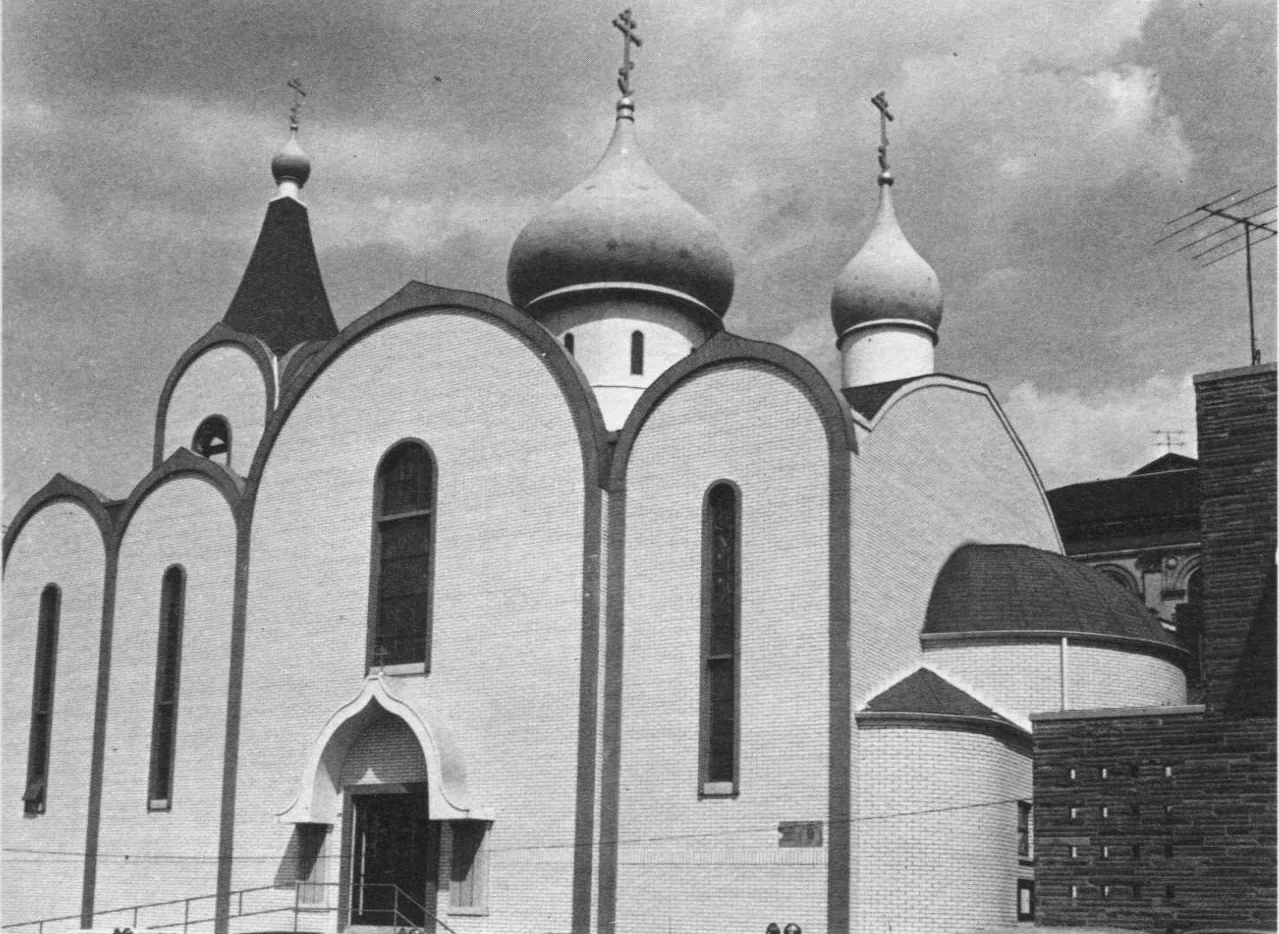
    The serviceable canopy over the side entrance replaced a much more characteristic original, as we see in this 1970s photograph.

    1970s photo of the side of the church, showing former canopy
    From “Our Eastern Domes, Fantastic, Bright…,” by James D. Van Trump. PHLF; reprinted from Carnegie Magazine.

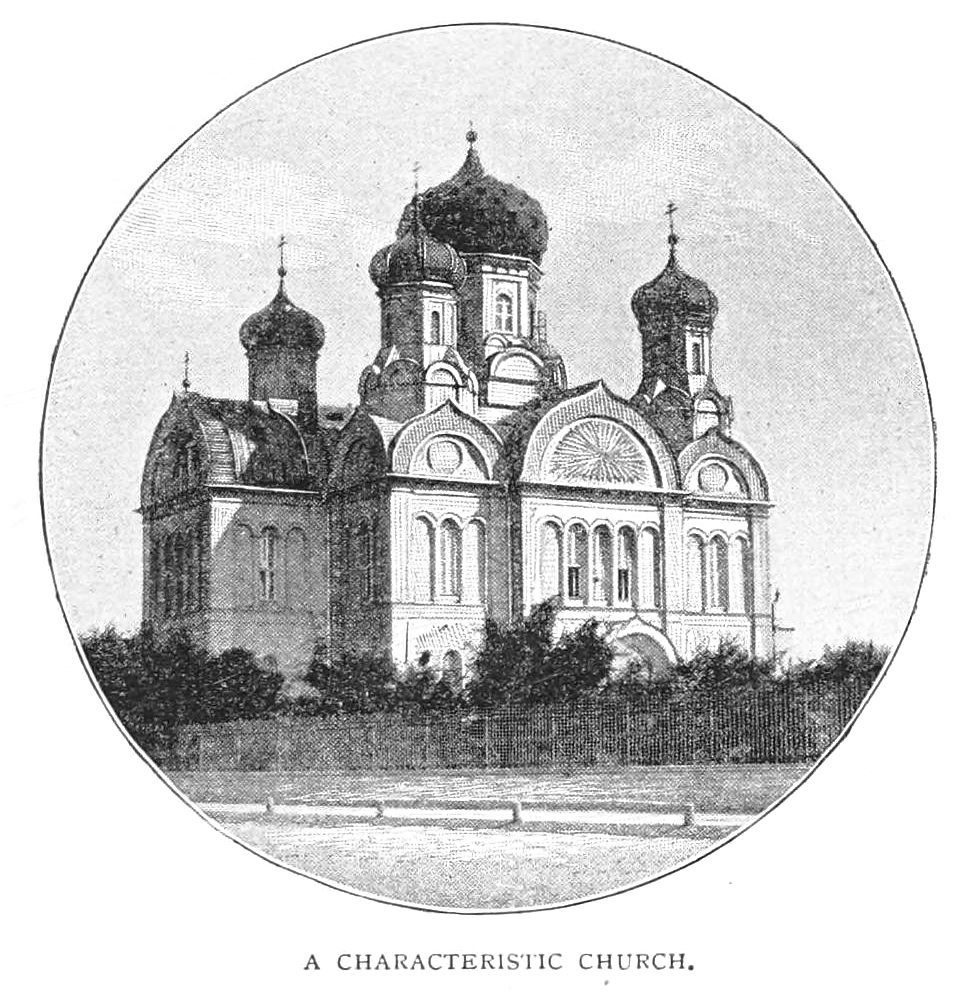
    A comparison with this illustration of “a characteristic church” in Moscow (from from John L. Stoddard’s Lectures, 1898) shows us how neatly Padukow adapted traditional Russian forms to a modern idiom.

    A Characteristic Church, from John L. Stoddard’s Lectures
    Cornerstone with date 1974
    Front of the church
    Entrance
    Dormition of the Holy Virgin Russian Orthodox Church
    Sony Alpha 3000; Fujifilm Finepix HS10.

    Comments
    September 21, 2025
  • A Few Houses on Fifth Avenue in Shadyside

    5501 Fifth Avenue

    Fifth Avenue in Shadyside was the most famous of the millionaires’ rows in Pittsburgh. But there were some more modest houses as well—“modest” being a comparative term here. Some predated the arrival of the millionaires, and some were beyond the main stretch of mansions. Many have been replaced by postwar apartment buildings, but a number of these houses survive. A while ago, Father Pitt took an evening stroll on Fifth Avenue to have a look at some of them. Above, a wood-frame Queen Anne mansion with picturesque protrusions in all directions.

    5529

    A center-hall house in the turn-of-the-twentieth-century interpretation of Georgian style.

    5537

    Another center-hall house of the sort old Pa Pitt would call a center-hall foursquare. Walking around to the side reveals a fat turret that must add to the interest of the interior.

    5537 with turret
    5321

    Another Georgian house, though the Georgian era was lamentably ignorant of buff Kittanning brick.

    5321
    5317
    Sony Alpha 3000.

    From the old days, before the millionaires, here is a wide I-house whose main part seems to have been built before 1872.


    Comments
    September 20, 2025
  • Residential Relics on Highland Avenue, Shadyside

    244 South Highland Avenue

    The dense Highland Avenue business district in Shadyside spilled across the tracks from East Liberty in the 1920s. Before that, the area was a residential section that began to build up in the 1870s. And if you peer behind the storefronts, you can see that much of that residential section is still there behind a crust of commercial development. For example, the building above looks like a typical 1920s store-and-apartments building from the front, but from this angle we can see that it’s an addition to a large double house built in the Second Empire style in the 1870s.

    232 South Highland Avenue

    This house had its ground floor turned into a store without extreme alterations to the rest of the building.

    Gable
    258 South Highland Avenue

    This Second Empire house, built in the 1880s, has a magnetic attraction for architectural debris.

    254 South Highland Avenue
    254 South Highland Avenue
    Fujifilm FinePix HS10.

    Comments
    September 20, 2025
  • EQT Plaza

    Detail of EQT Plaza
    Fujifilm FinePix HS10.

    A geometric abstraction from EQT Plaza, built as the CNG Tower.


    Comments
    September 19, 2025
  • The Center of Dormont

    2900 West Liberty Avenue

    The corner of West Liberty Avenue and Potomac Avenue is the center of the Dormont commercial district, and it is framed by two buildings that are very well suited for such a prominent location. The ground floor of the one above has been remodeled more than once, including what must have been an eye-catching moderne remodeling that left it with some rounded windows. The corner is marked with a turret, which is always good on a corner building. We suspect that the turret may have had a witch’s cap on top, but even without it the turret makes a good corner marker, accented with terra-cotta foliage around the top.

    Turret with terra-cotta foliage
    2890 West Liberty

    This building has a storefront with a proper corner entrance that has not been filled in, though the ground floor also appears to have been remodeled in the mid-twentieth-century moderne era.

    2890 West Liberty Avenue
    Fujifilm FinePx HS10.

    Comments
    One response
    September 19, 2025
  • A Handsome Warehouse in the Strip

    1649 Penn Avenue

    A century ago, if we read our old maps right, this building was a garage—and probably warehouse—for the Pennsylvania Motor Sales Corp. (Addendum: It was built in 1919, probably finished in 1920; the architect was Thomas Hannah.1) The ground floor now houses a large Asian market full of delicious things; the upper floors still seem to be used for storage. The original windows are still in the upper floors, making this an unusually well-preserved example of commercial architecture of the First World War period.

    Decorative tile

    The utilitarian square front (whose proportions are already dignified) is livened up by brightly colored tile decorations.

    1649 Penn Avenue
    Fujifilm FinePix HS10.

    Comments
    September 18, 2025
  • French Cottage in North Point Breeze

    7001 Penn Avenue

    Alternating bands of brick and stone make this fantasy French cottage more than usually picturesque.

    7001 Penn Avenue
    7001 Penn Avenue
    Sony Alpha 3000.

    Comments
    One response
    September 18, 2025
  • Evangelical Congregational Church, McKeesport

    Evangelical Congregational Church

    New England Colonial style with an outsized octagonal tower that certainly commands attention.

    Evangelical Congregational Church
    Entrance
    Tower and spire of the Evangelical Congregational Church
    Evangelical Congregational Church
    Sony Alpha 3000.

    Comments
    September 17, 2025
  • Fine Dining in 1883

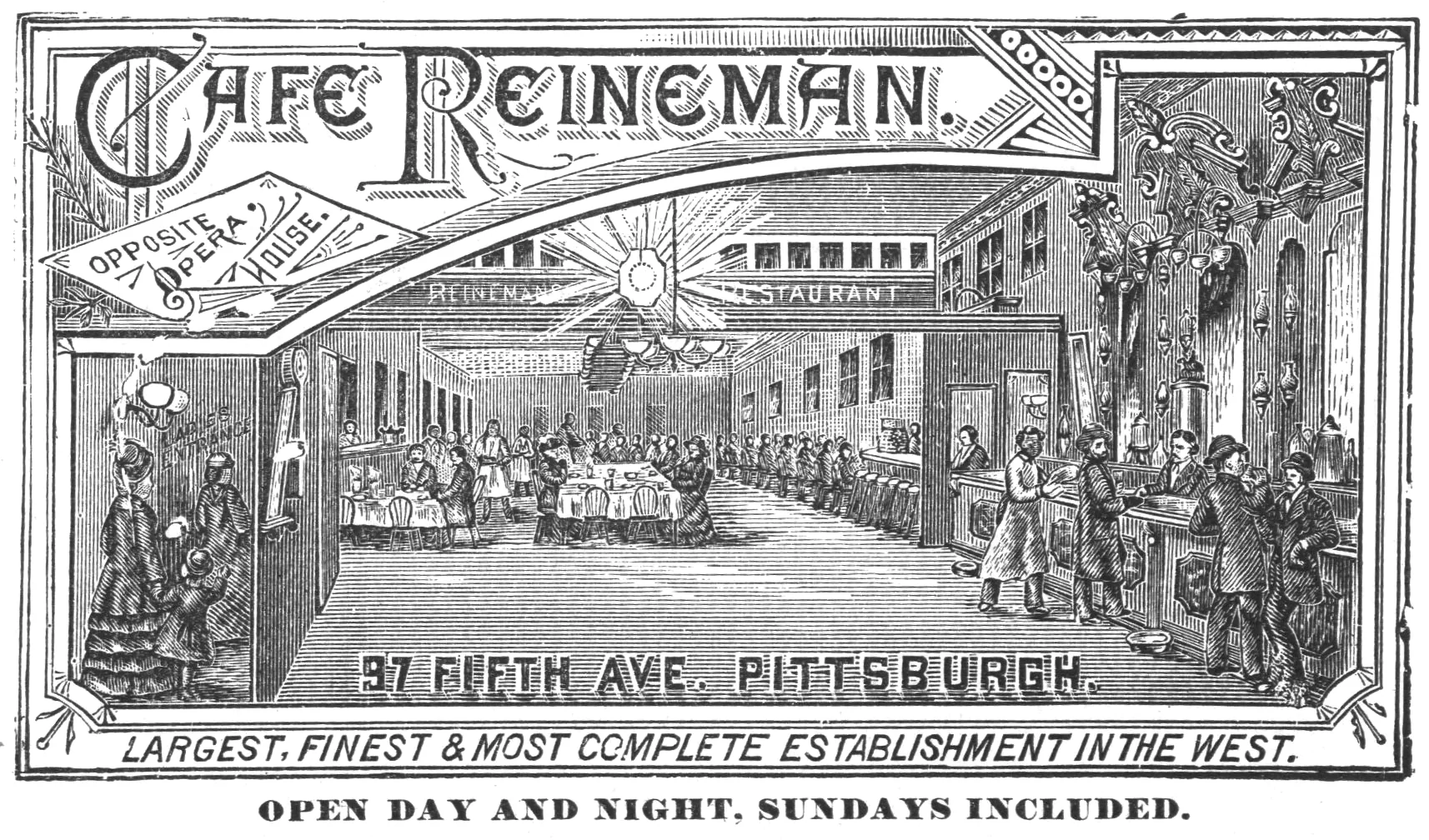
    Prospectus of the Seventh Annual Exposition of the Pittsburgh Exposition Society, 1883.

    A look at the interior of the Cafe Reineman on Fifth Avenue shows us what was expected of any establishment claiming to be the best restaurant in Pittsburgh, and indeed west of the Allegheny Mountains. It is brightly lit by gas—the artist has made the illumination by large chandeliers a prominent feature. It has tables for couples and families arrayed in efficient rows to accommodate many guests and leave room for the waiters to navigate. It has an ornate bar with immense mirrors and proper facilities for expectoration on the floor. For single gentlemen diners, there are stools along the wall. For unaccompanied ladies, there is a Ladies’ Entrance as far from the bar as practically possible, allowing them to pass into the eating part of the establishment without enduring rude remarks from the expectorating drunks—who appear to be starting a fight even in the drawing, as if a bar without a fight would be an unacceptable omission in the most complete establishment in the West. And, of course, the location is important: just across from one of the main theaters, the Opera House, whose last incarnation became the Warner. (Note that address numbers on Fifth Avenue have changed: this would be at about 343 Fifth Avenue now.)
    September 16, 2025
←Previous Page
1 … 28 29 30 31 32 … 446
Next Page→