

Boston ivy (Parthenocissus tricuspidata) begins to show its autumn color, and its little inedible grapes, on a garage wall in an alley on the South Side.

Boston ivy (Parthenocissus tricuspidata) begins to show its autumn color, and its little inedible grapes, on a garage wall in an alley on the South Side.

Mount Lebanon is what old Pa Pitt calls an urban suburb. It is outside the limits of the city of Pittsburgh, but otherwise the core of it is a city neighborhood, with an urban business district. (An urban business district, in Father Pitt’s definition, is one in which the businesses line up abutting the sidewalk, with no parking lots in front of them.) “Uptown” Mount Lebanon is a pleasant place for a stroll, with many restaurants and specialty shops to lure you off the sidewalk. And as we can see in this picture, it is actually one of the broadest urban business districts in the entire metropolitan area. In Washington, D.C., this would be merely average, but Pittsburgh has very few spaces that can accommodate a commercial street this wide.

A very plain apartment block (as far as we can tell from the outside, the name of it is For Rent 2 & 3 Bedroom Apartments), but an attractive addition to the street nonetheless. The prominent bays, which would have been spurned by modernist architects, have two salutary effects. Aesthetically, they vary what would otherwise be a monotonous front. If you are the kind of modernist who despises aesthetic considerations, however, consider the practical purpose: bays like these flood the interior with light in a way that cannot be accomplished with any flat surface.
Addendum: According to our local John McSorley expert, this building was put up for developer John McSorley in 1903. The architect was J. A. Thain from Chicago.

Uptown Mount Lebanon has one of the best collections of Art Deco architecture in the area. These two buildings sit side by side on Washington Road at the corner of Alfred Street. With some confidence, old Pa Pitt identifies the Gothic fantasy on the right as an old movie theater, although he would be happy to be corrected.
Update: Father Pitt is corrected. The building on the right was the William Hall office and apartment building, designed in 1929 by Geisler & Smithyman. The one on the left was the Medical Arts Building, as we can guess from the splendid terra-cotta panels.

Clearview Common is a little parklet at the corner of Washington Road and Alfred Street in the middle of the Uptown Mount Lebanon business district. It makes an urban oasis out of a vacant lot, and this fountain is one of its distinctive features.
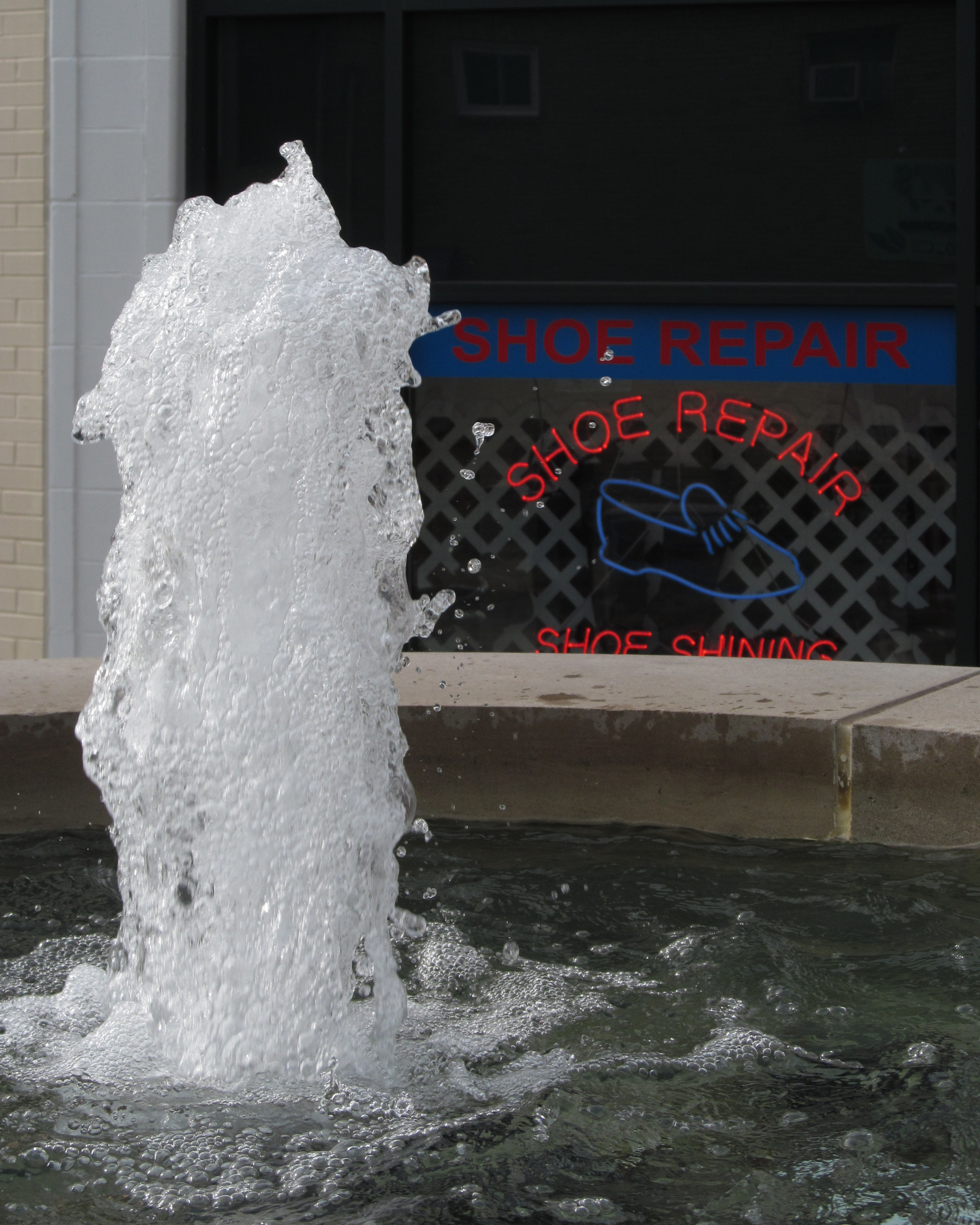
Pittsburgh natives are probably not aware that, to outsiders, one of the most surprising things about the city and its inner suburbs is the ubiquity of shoe-repair shops.
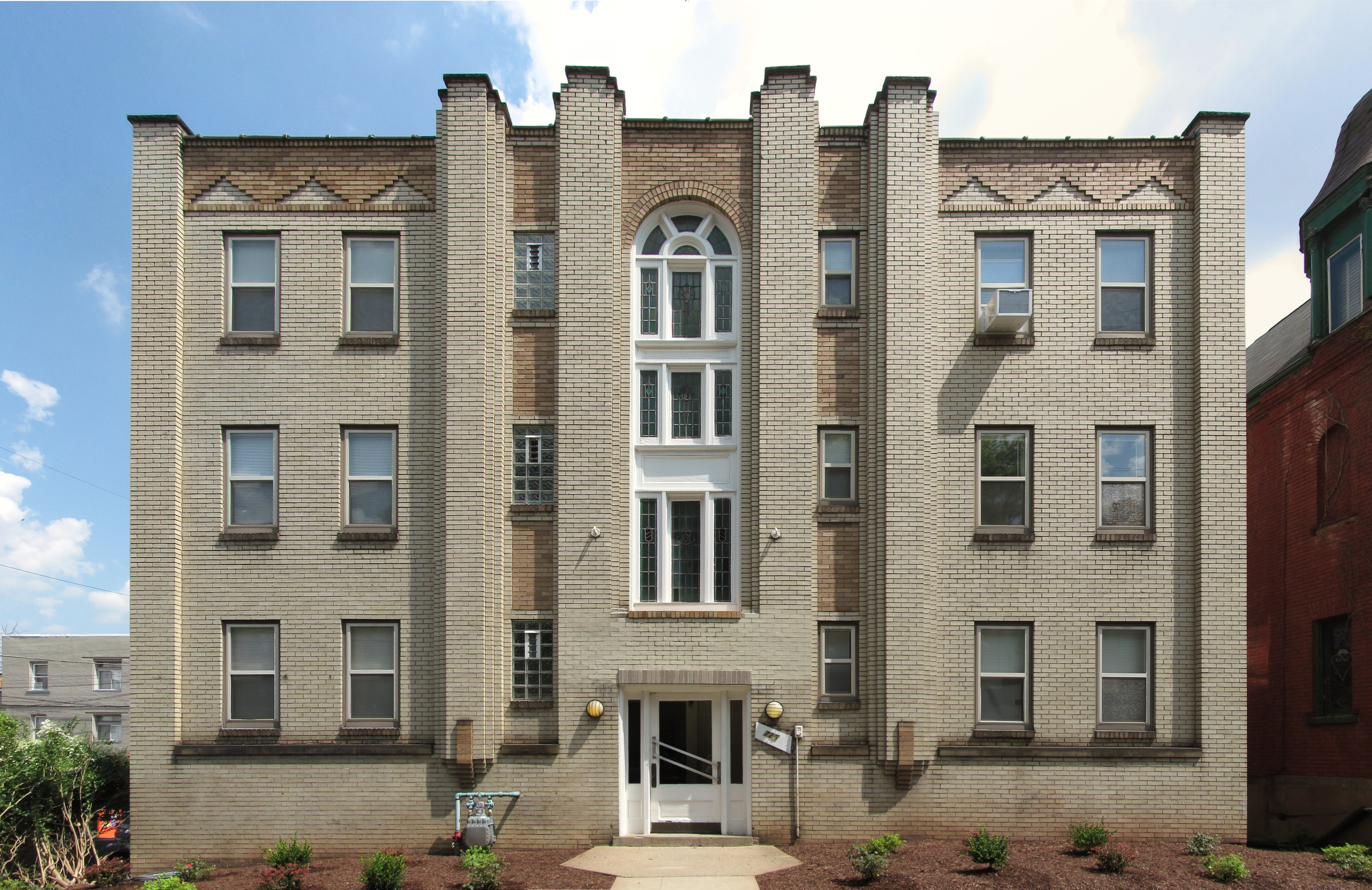
A modest apartment building with a bit of Art Deco flair in the brickwork and the staggered vertical lines.

A row of more than usually ornate Italianate windows on Carson Street, South Side.


