Some of the earliest skyscrapers sprouted on Fourth Avenue, which is an absurdly narrow street for towers like these. Since Pittsburgh never developed a setback rule like Chicago or New York, the towers go straight up, which accents the narrowness of the street even more.
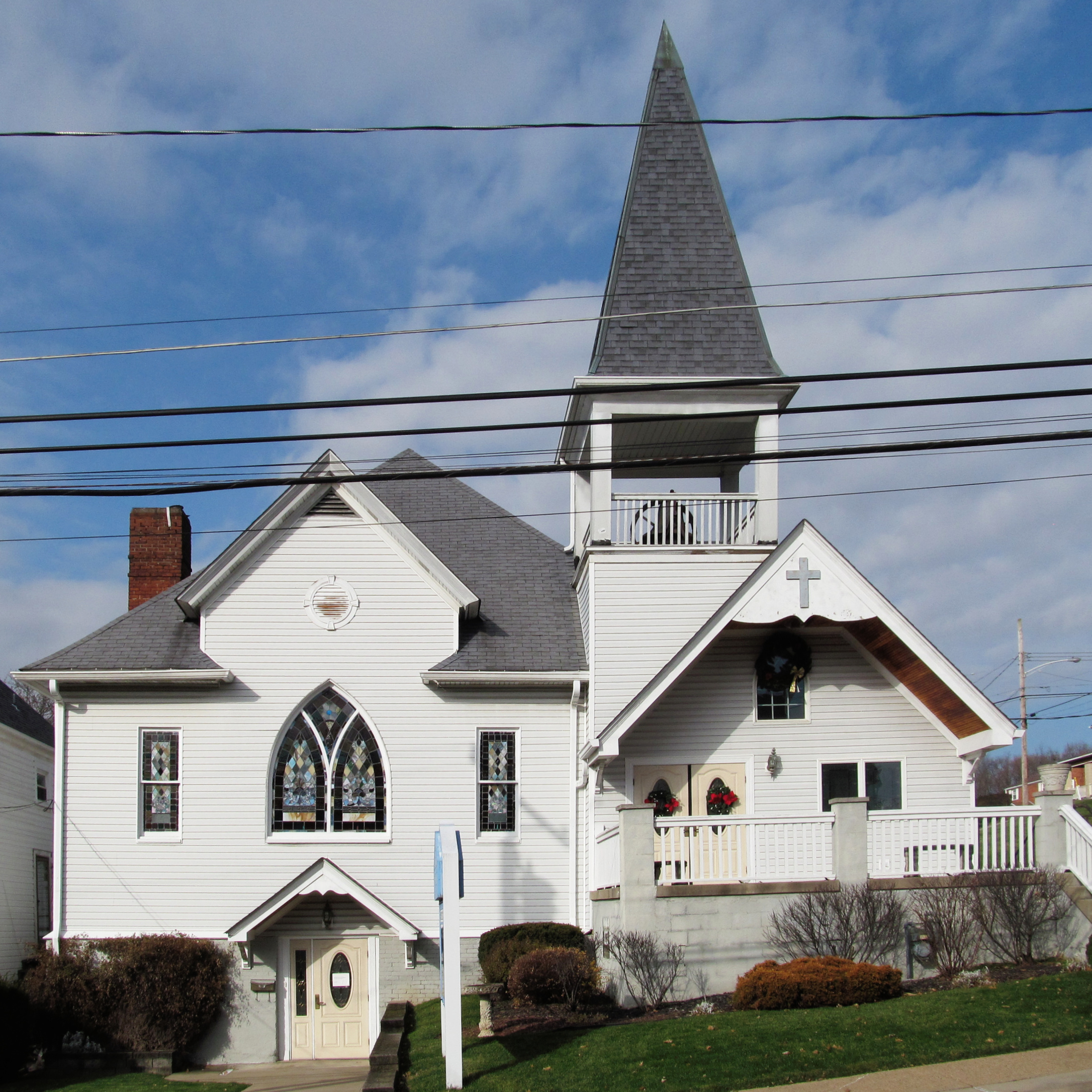
A wood-frame country church whose most identifiable feature is its big square belfry. Artificial siding has eaten up some of the trim and made the walls a little monotonous, but the shapes of the various masses still make an interesting composition.
Two universities in Pittsburgh have signature Gothic skyscrapers. Everybody knows the Cathedral of Learning at Pitt, but Lawrence Hall at Point Park University is also Gothic and also a skyscraper. By a strange coincidence that probably no one else in history has noticed (this is how dedicated old Pa Pitt is to you, his readers), it is within a foot or two of being precisely half the height of the Cathedral of Learning. (Cathedral of Learning: 535.01 feet; Lawrence Hall: 265.72 feet. Source: Emporis.com.)
It was not always Lawrence Hall, of course. It was built as the Keystone Athletic Club in 1927; the architect was Benno Janssen, who also designed the Pittsburgh Athletic Club, the Twentieth Century Club, and the Masonic Temple, all in Oakland, and a remarkable number of other prominent buildings in the city. The Depression was hard on clubs; the Keystone Athletic Club (doubtless saddled with debt from building a skyscraper clubhouse) collapsed in 1934, and after that the building was a hotel until Point Park College picked it up in the 1960s. It was renamed for the Renaissance mayor David Lawrence, and now it anchors the ever-spreading downtown campus of the university.
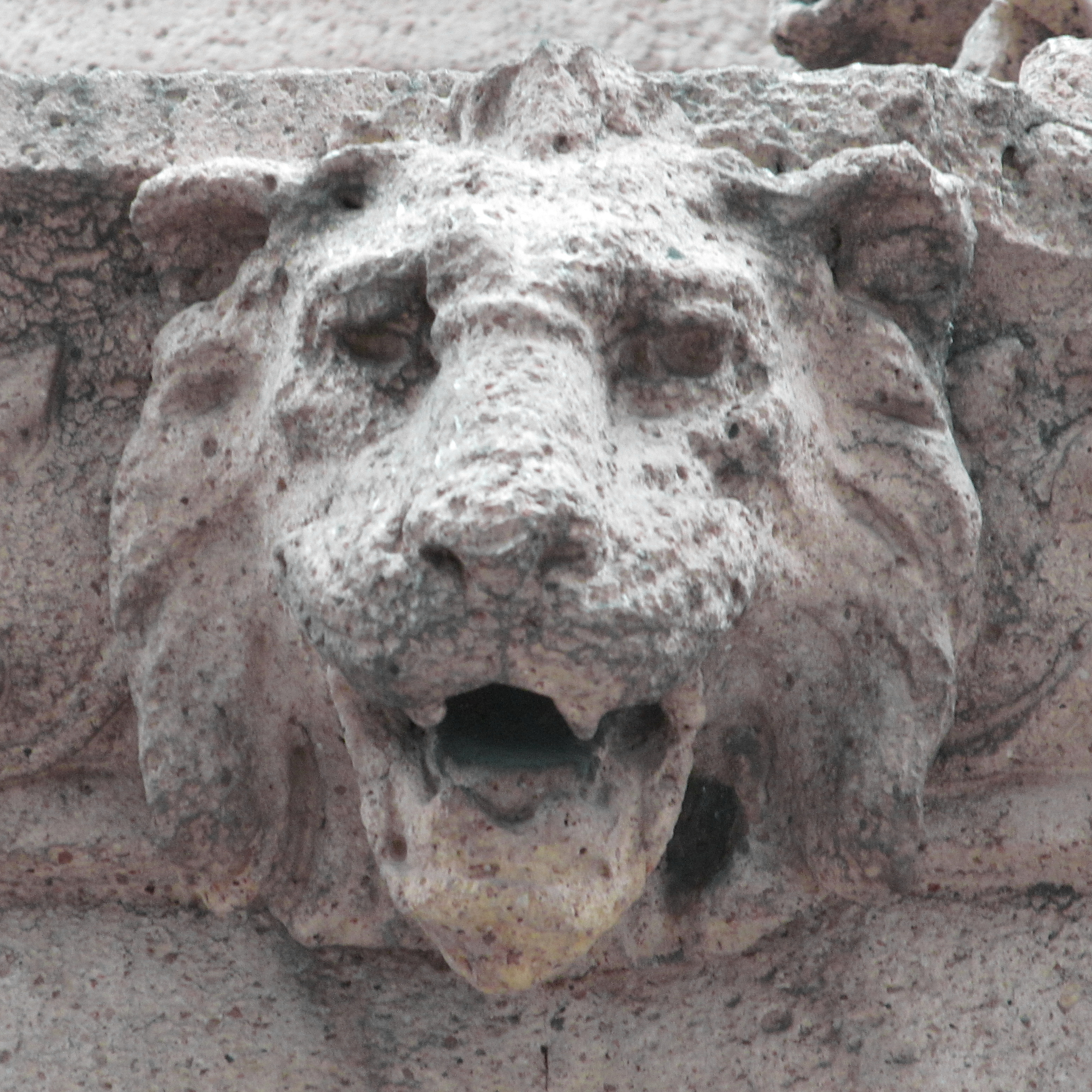
This little bank on Fourth Avenue was originally designed by Alden and Harlow. The central section has been ruthlessly mutilated, with the elegant arch replaced by a cartoon suggestion of an arch. For reasons unknown, much of the rest of the building was left untouched (although it is pretty clearly missing its top), and the details there are enough to make it worth our while to stop and admire them.
Of course there are lions. How could there not be lions?
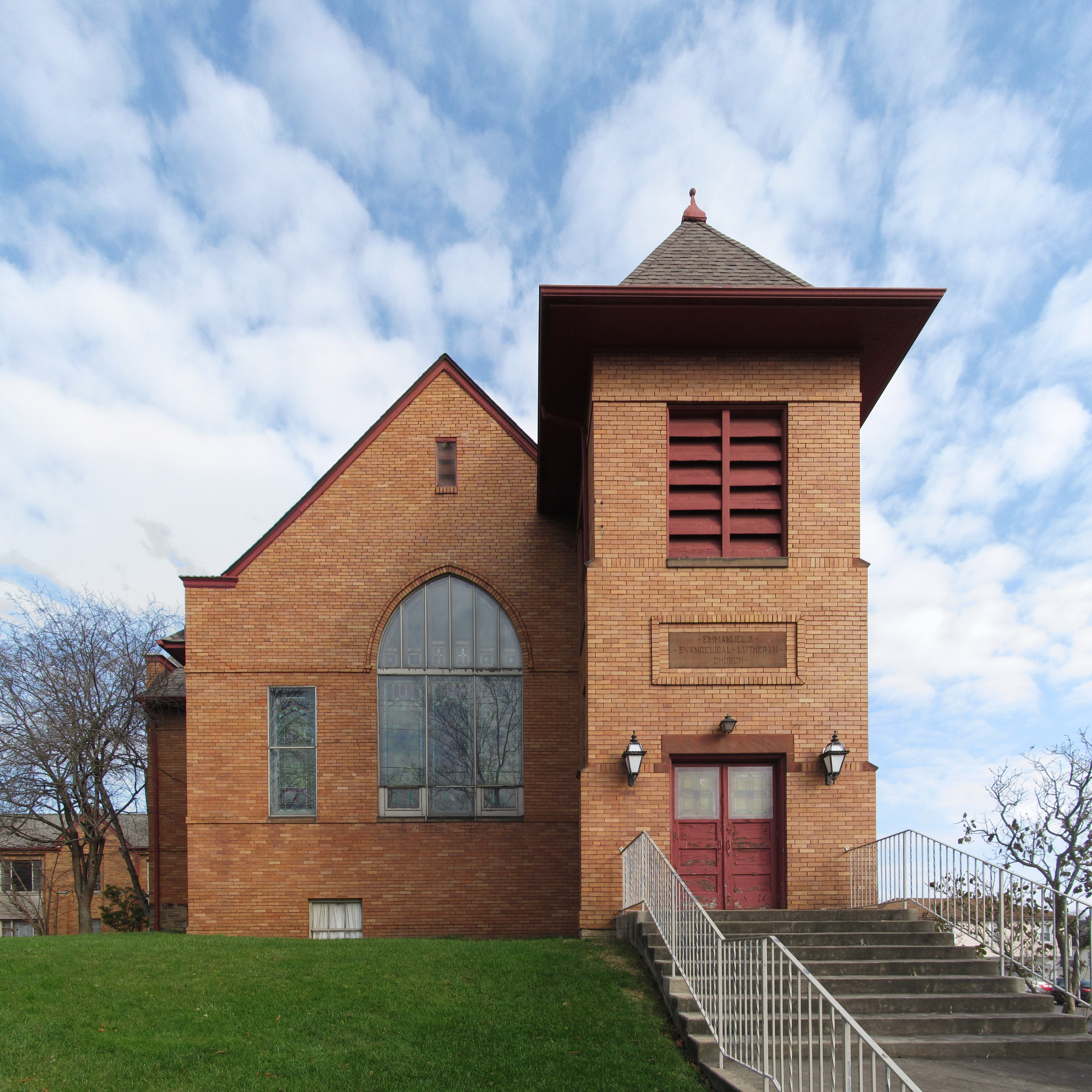
This is the old church, which apparently now hosts a congregation called Providence Church. Next door the Lutherans have a newer building, now called Emmanuel Lutheran, since the possessive was banned from church names in the late twentieth century. This building is not a work of high architecture, but it is a pleasant village church in the Gothic style, and the substantial square corner tower makes it look like an anchor of the neighborhood.
The adjective “tasteful” does not naturally attach itself to this structure. It has the look of a building specified by a banker who hired an expensive architect and was determined to wring every cent of his money’s worth out of the details. It is magnificent in a slightly horrifying way: this is the kind of monstrosity that was in the minds of the modernists when they condemned all things Victorian. Old Pa Pitt would not change a single swirl or swag or grotesque half-vegetable naked lady.
The architect in question was the firm of Isaac H. Hobbs & Sons from Philadelphia. Isaac H. Hobbs was a kind of celebrity architect. He was familiar to the thousands of ladies across our fair land who read Godey’s Lady’s Book, the premier fashion magazine of the middle 1800s: every month, Hobbs contributed a design for an elaborately Victorian residence for the lady readers to drool over. It was something like having a regular segment on a popular daytime talk show today. According to the Pittsburgh History and Landmarks Foundation’s Fourth Avenue walking tour (PDF), Hobbs designed a number of houses around Pittsburgh, but Father Pitt does not know any of them; he wonders whether they were original designs, or whether they were adaptations of the many designs published in Godey’s.
It appears that the crust of 150-year-old ornamentation requires some stabilization: netting is stretched over the top half of the building at the moment.
After much expensive restoration and renovation, the Arrott Building (designed by Frederick Osterling) has reopened as a hotel called “The Industrialist.” The exquisite lobby has been carefully preserved. The picture above is huge, stitched together from several photographs to make what may be the only complete head-on picture of the Wood Street façade of the building on the internet.
A splendid banking hall with façades by Frederick Osterling. The Wood Street one above is one of his late works, from 1926. Many of the banks along Fourth Avenue went for height, building some of the first skyscrapers; the Colonial Trust Company went for length. Its main hall extends all the way through from Fourth to Forbes, with elaborate façades at both ends; it later extended a perpendicular arm to Wood Street. Below, the Fourth Avenue façade from 1902, also by Osterling. We can see how much his ideas of classical architecture had changed in 24 years. In 1902 he chose the Corinthian order and elaborated it with every kind of ornament of which classical architecture is capable; in 1926 he chose the Ionic order and kept the ornamentation to a minimum.
This is very definitely a corner building, and architects MacClure and Spahr made the corner the most identifiable thing about it. That curved corner runs all the way up to the top, and the main entrance is right on the corner of Fourth and Wood.
Notice the capitals on those prominent columns. How do you adapt square Doric capitals to a fairly tight curve? Making them octagonal is a solution that might have given Vitruvius a stroke, but works very well in this context.
The building is now luxury apartments under the name “The Carlyle.”