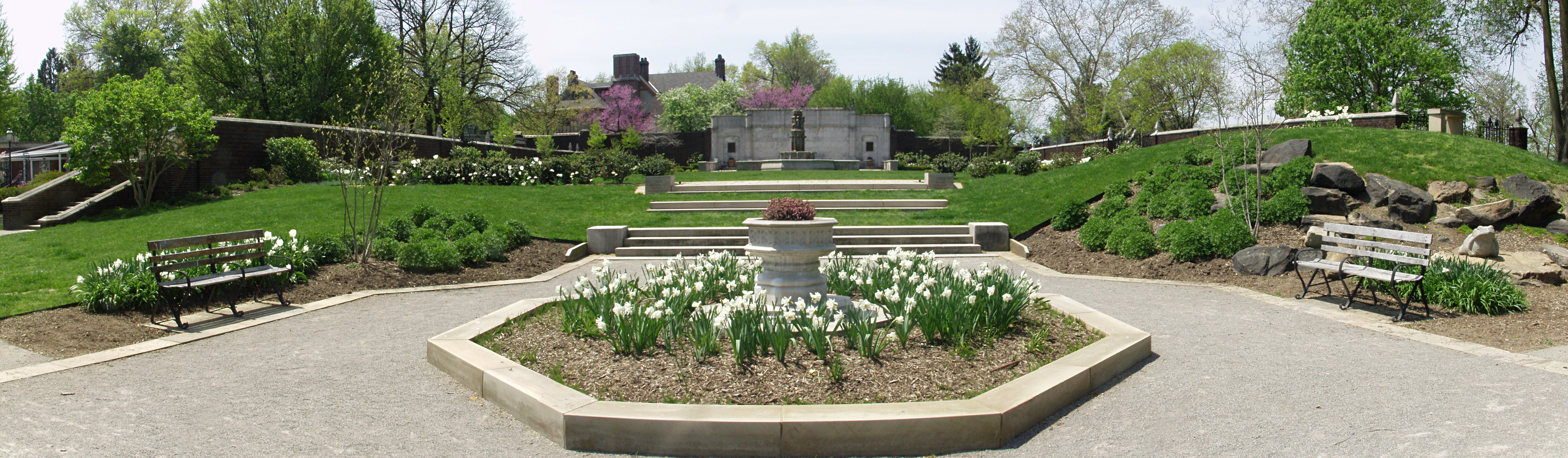
A panoramic view of the Walled Garden. Mellon Park was originally the Mellons’ back yard; the Walled Garden was designed by the landscape architects Vitale and Geiffert.

Until April 4, the Frick is hosting an exhibit called “Impressionist to Modernist: Masterworks of Early Photography.” The “early” part is debatable—the exhibit begins in the 1880s and concludes in the 1930s, by which time photography was already a century old. Father Pitt would call these works “middle” photography. There is no room for debate on the quality of the exhibit itself: all the artistic possibilities of photography as a medium are on display. It was enough to inspire old Pa Pitt to try some work in black and white, so here are some ducks:

Well, it’s not Steichen, but Father Pitt liked the ripply reflections of cattail stalks.
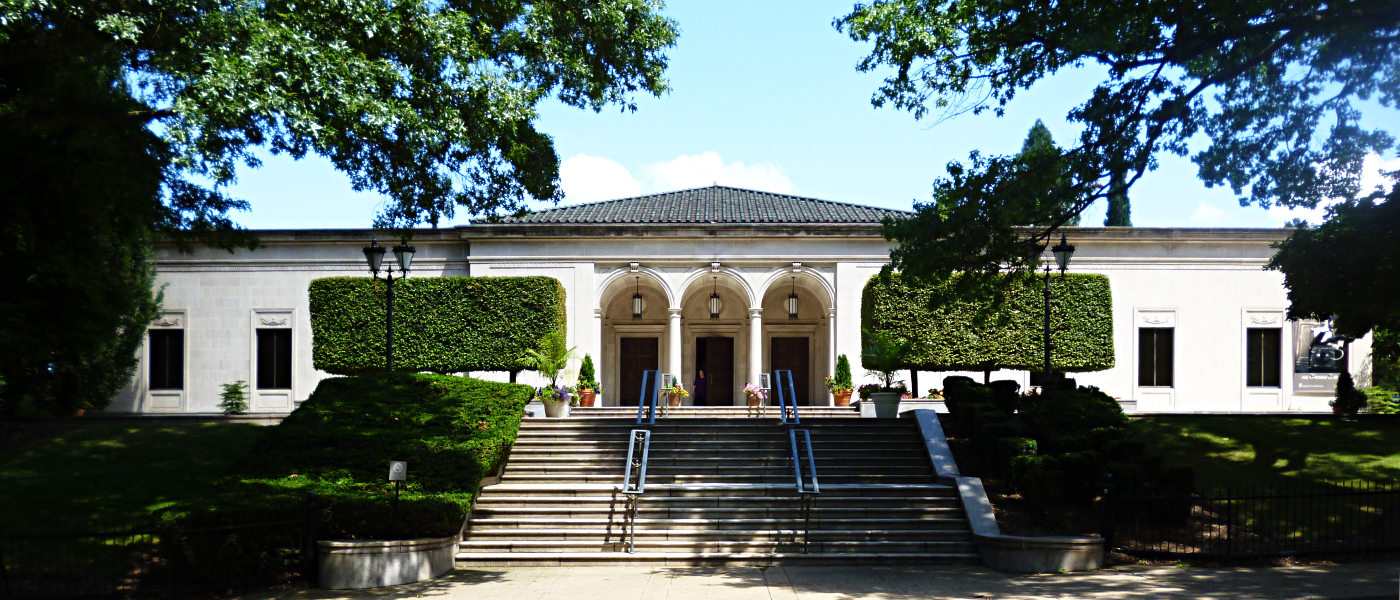
Helen Clay Frick built this charming Renaissance palace in her back yard to give the people of Pittsburgh a chance to admire her art collection. It’s a small collection—a Reynolds here, a Boucher there—but an extraordinarily rich one for its size. And in a city where the collective museum culture has decided that expensive admission fees are the rule, the Frick is always free.

The Frick Art Museum in Point Breeze was built as a home for Helen Clay Frick’s art collection. It’s a small collection, but chosen with good taste–a Boucher here, a Reynolds there, and a roomful of priceless medieval religious art. The building itself is less than forty years old, but the timeless design could easily have been a Renaissance palace.

The Linden Avenue School in Point Breeze. Learning must be something beautiful and important if it takes place in a building like this.