For some time now, old Pa Pitt has been gathering information about buildings and their architects in a spreadsheet, so that he doesn’t have to go looking for the information every time he takes another picture. It is still in its early stages, but it already has more than 200 entries. Since it might be useful to other people as well, Father Pitt has decided to publish it:
You should be able to download the spreadsheet in Open Document, Excel, or any of several other formats, and you can play around with the spreadsheet without changing the original.
Henry Hornbostel imagined filling the University of Pittsburgh’s hillside site with classical temples, making a new Pittsburgh Acropolis that would be the envy of the intellectual world. The plan was never completed, because classical architecture went out of fashion too soon, and because it was supplanted by the even madder plan of putting a university in a skyscraper. But several of the classical buildings that remain on Pitt’s campus were meant to be part of this Pittsburgh Acropolis.
The image comes from an advertisement for Ruud water heaters, the amazing improvement in hot-water supplies that didn’t require servants to tend to a boiler.
Cy Hungerford was a Pittsburgh legend. He drew editorial cartoons for more than seventy years, fifty of those years for the Post-Gazette. In this cartoon from August 11, 1927, he depicts poor Uncle Sam walking a tightrope labeled “The Sacco-Vanzetti Case” over Niagara Falls. Old Pa Pitt took this cartoon from a microfilm archive and cleaned it up quite a bit, so that it looks more like Hungerford’s original drawing and less like a scratched and grubby microfilm. It is out of copyright in the United States, so anyone can use it. In countries where copyright depends on the life of the author, be aware that Hungerford lived till 1983. It is very unlikely that his estate will worry about someone using his cartoons in Luxembourg or Malaysia, but old Pa Pitt, who is based in the United States, is not responsible for foreign copyright laws.
Thanks to a kind correspondent, old Pa Pitt has an opportunity to prove himself right about one thing and wrong about something else. Being wrong is almost as good as being right, because it means learning something new.
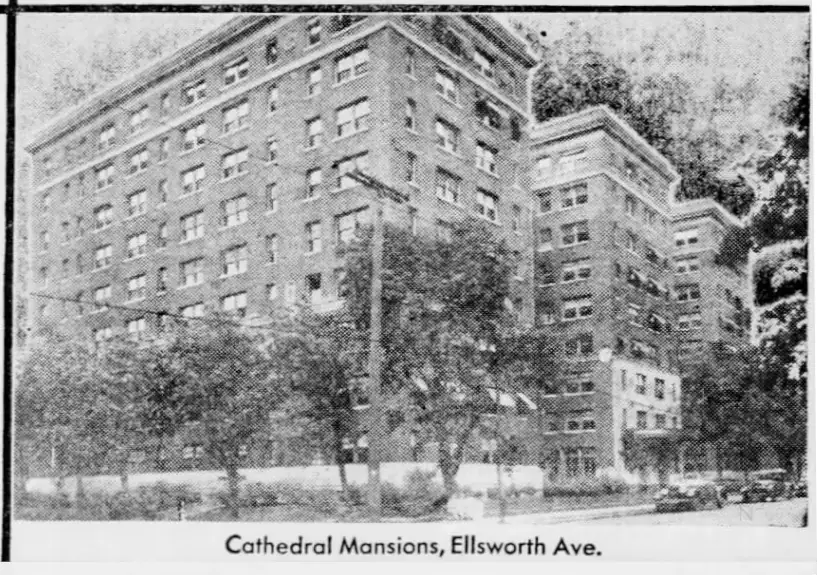
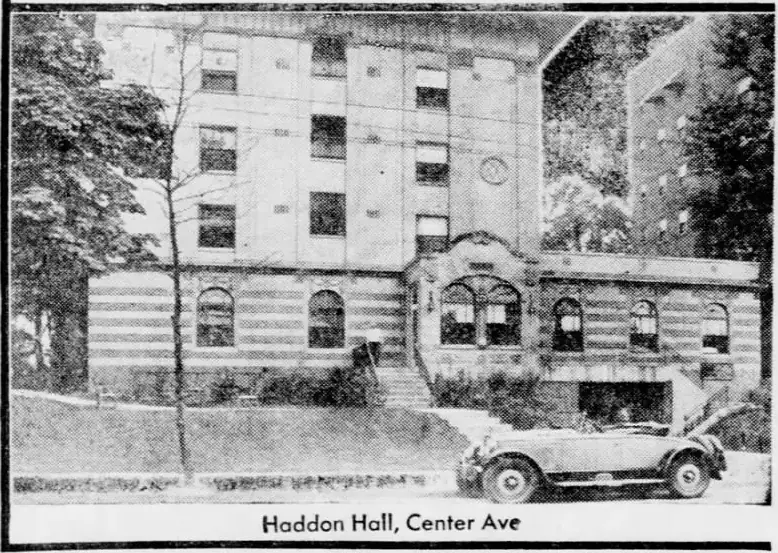
Our correspondent sent two pictures that appeared in an advertisement that ran in the Post-Gazette in 1929. The ad was for Frigidaire refrigerating systems, as used in prominent buildings in the city.
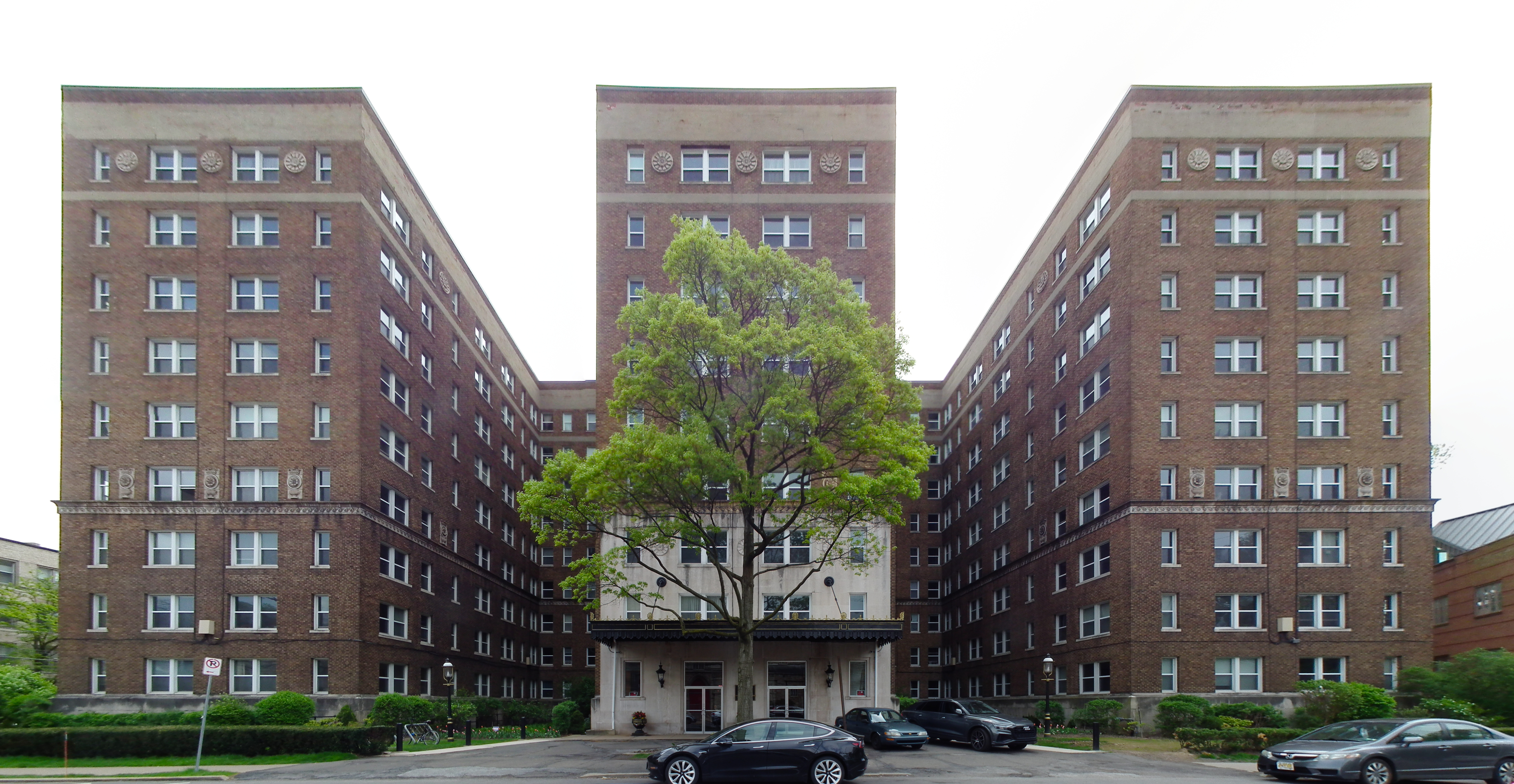
First, the Cathedral Mansions apartments on Ellsworth Avenue.
At that time we mentioned that we suspected it had lost a cornice. Father Pitt was right about that, as you can see from the 1929 picture.
Now, here’s the one we were wrong about:
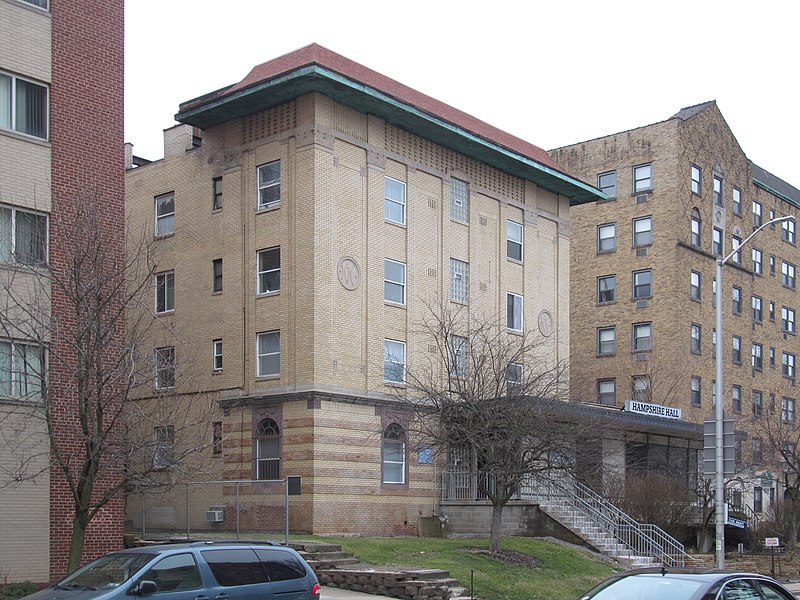
This building is now an apartment building called Hampshire Hall. As “Haddon Hall” it was a hotel with apartments. Here is what it looks like today:
The obvious change is that modernist growth on the front. When he published these pictures, Father Pitt wrote, “It appears to be a glass enclosure for what was once an elegant verandah.” That is wrong. It seems to have been a replacement for the original dining room or lounge of the hotel. It was probably put there in about 1961: a newspaper ad from December 22, 1961, promotes the Walt Harper Quintet’s appearance at the “newly remodeled Haddon Hall Lounge.”
Many thanks to our correspondent for the pictures, which give us new information about these two notable buildings. If anyone knows the architect of either one, but especially Haddon Hall/Hampshire Hall (which is in a distinctive modernist-Renaissance style), Father Pitt would be grateful for the information.
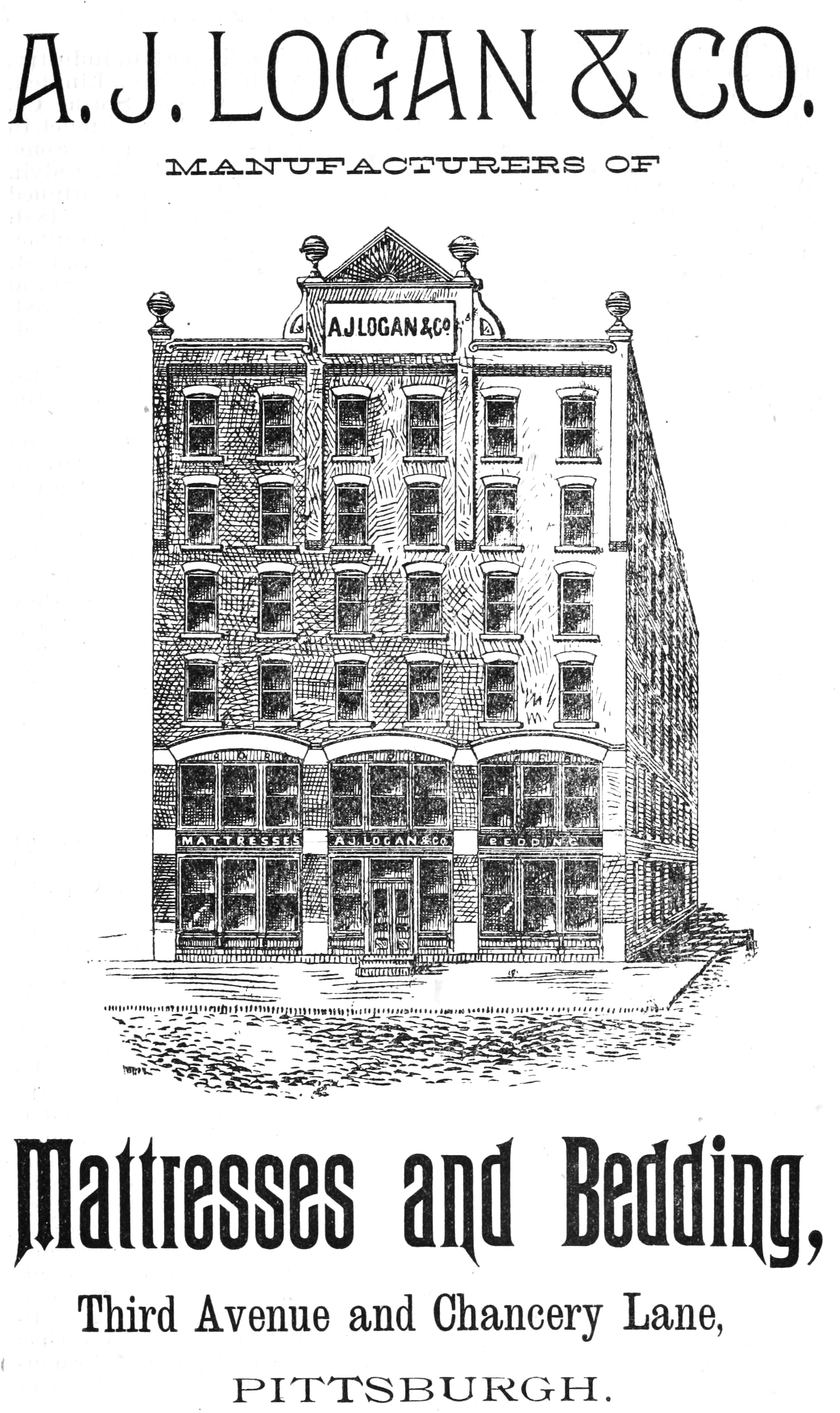
Since we were talking about T. C. McKee a couple of days ago, here is a work of his even earlier than the Shady Avenue Cumberland Presbyterian Church. It was built in 1888, according to Justin P. Greenawalt (PDF), and it was brand new (or possibly still a design on paper) when this advertisement was published in the Allegheny County Centennial Souvenir of 1888. McKee would have been about 21 when he designed this building. It stood on Third Avenue about where PPG Place is now.
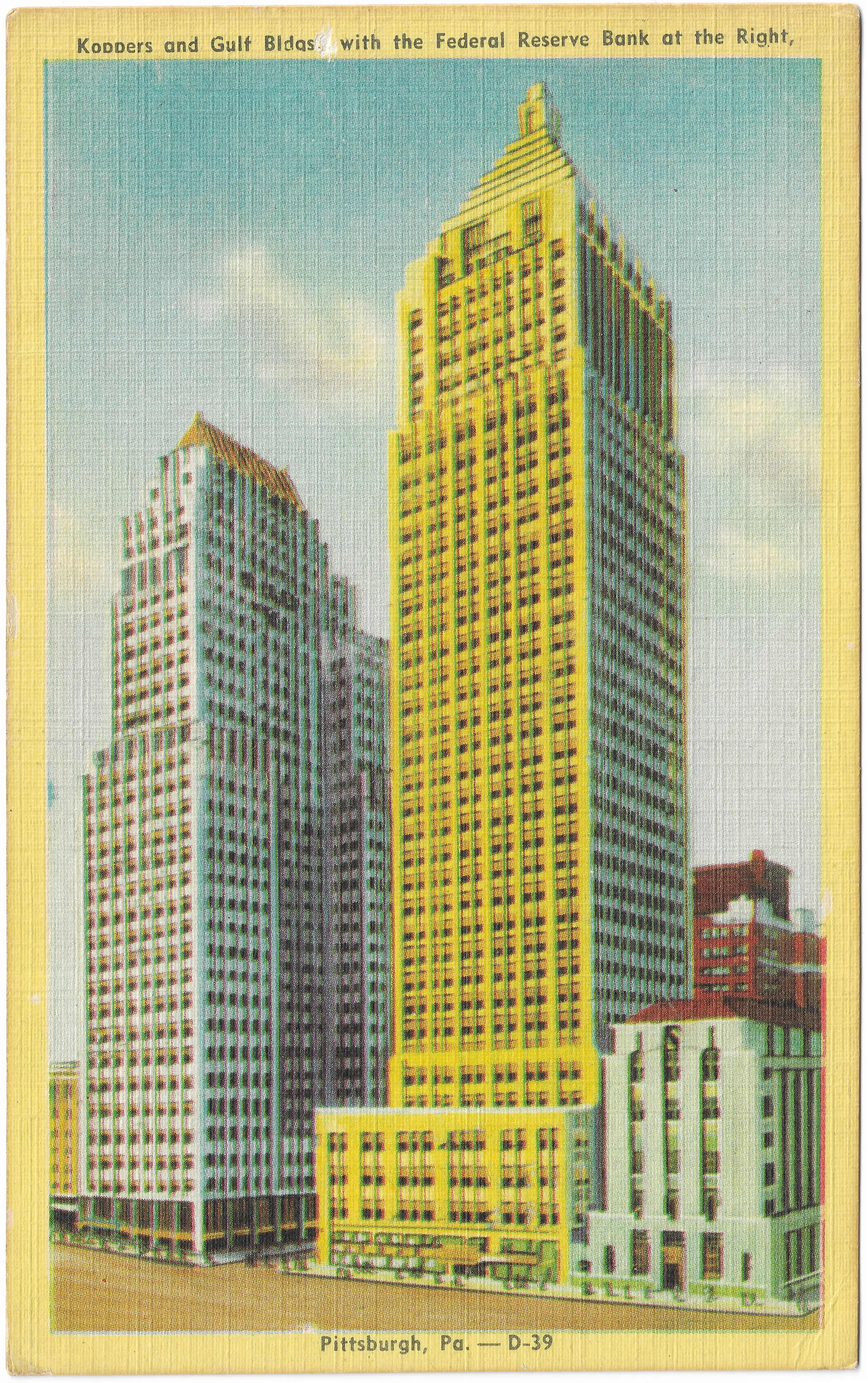
An old postcard from Father Pitt’s accumulation of Pittsburgh miscellanea; we do not know the date, but it must be before 1952, since the back of the card specifies “PLACE ONE CENT STAMP HERE.”
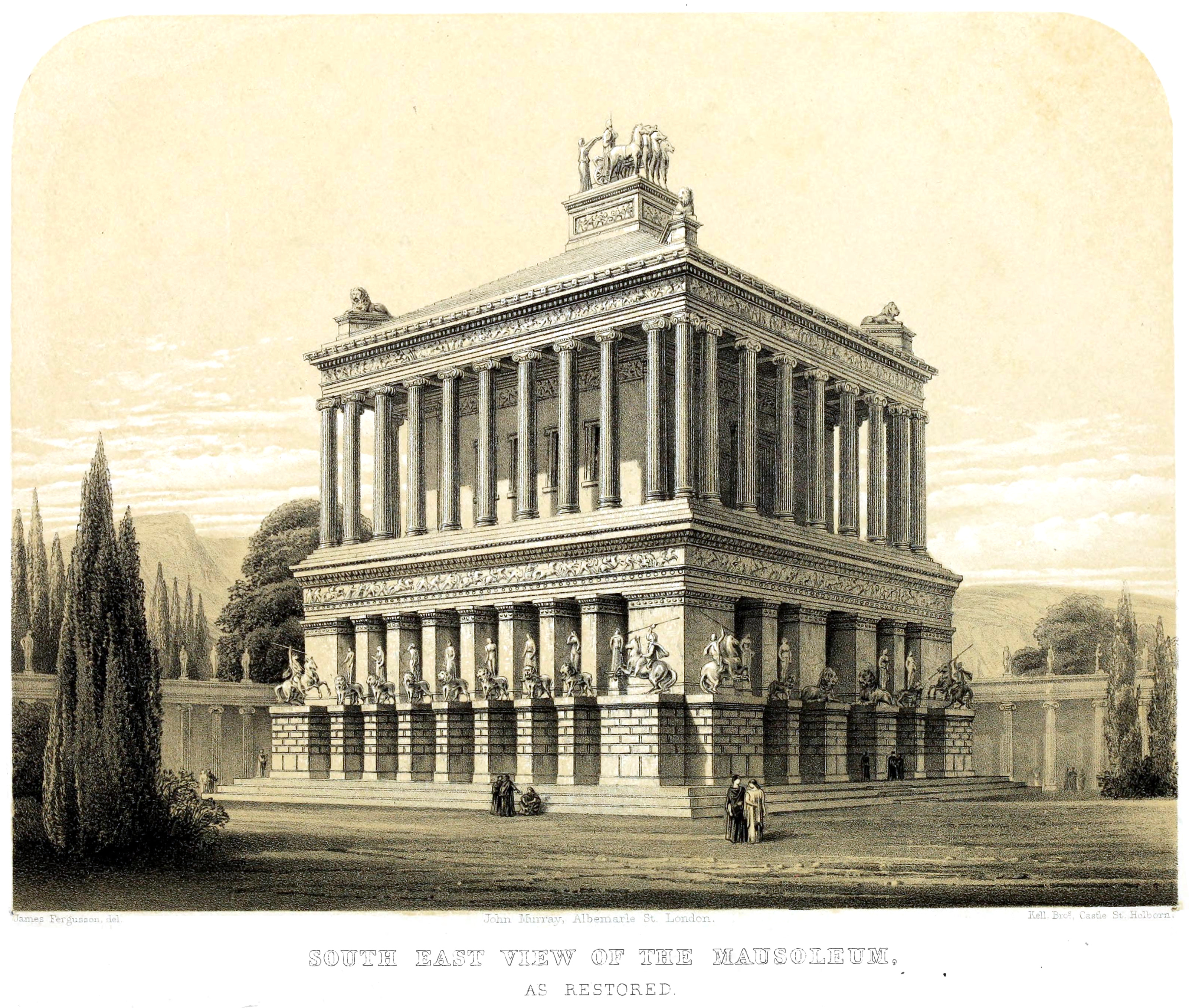
No one knows exactly what the Mausoleum at Halicarnassus looked like when it was intact. It was one of the Seven Wonders of the World, but today all that is left is a bit of rubble. The rough outlines are generally known, however, and the speculative reconstructions of it have been productive of more monumental architecture in Pittsburgh than perhaps any other classical building. At least half a dozen buildings in Pittsburgh were inspired by it: Soldiers & Sailors Hall, the Hall of Architecture at the Carnegie, Presbyterian Hospital, Allegheny General Hospital, the Gulf Building, and the Wilkins mausoleum in the Homewood Cemetery. Above is James Fergusson’s version of how it must have looked, and Fergusson’s was one of the most influential reconstructions. See if you can spot the resemblance with the Soldiers and Sailors Memorial by Henry Hornbostel:
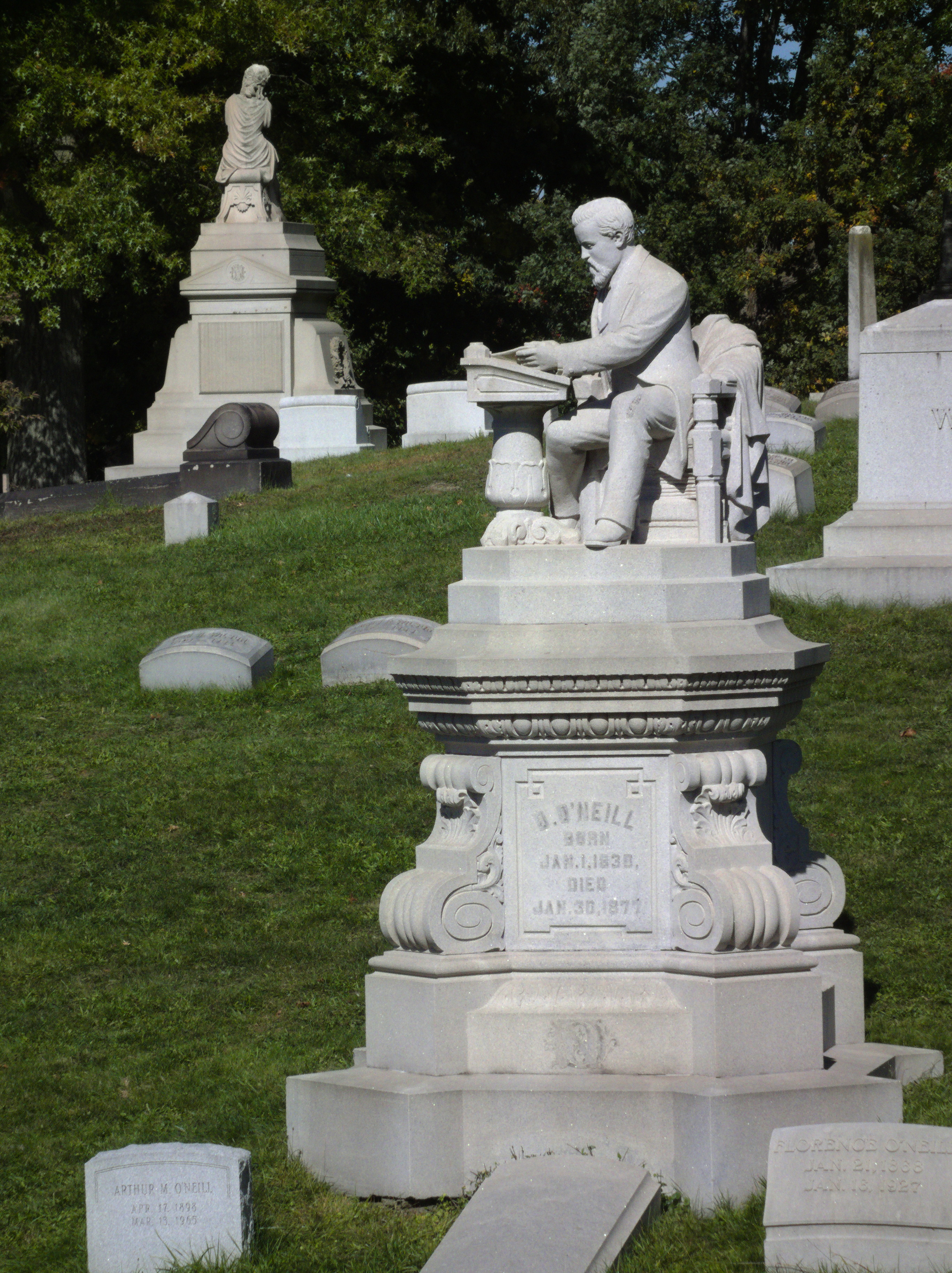
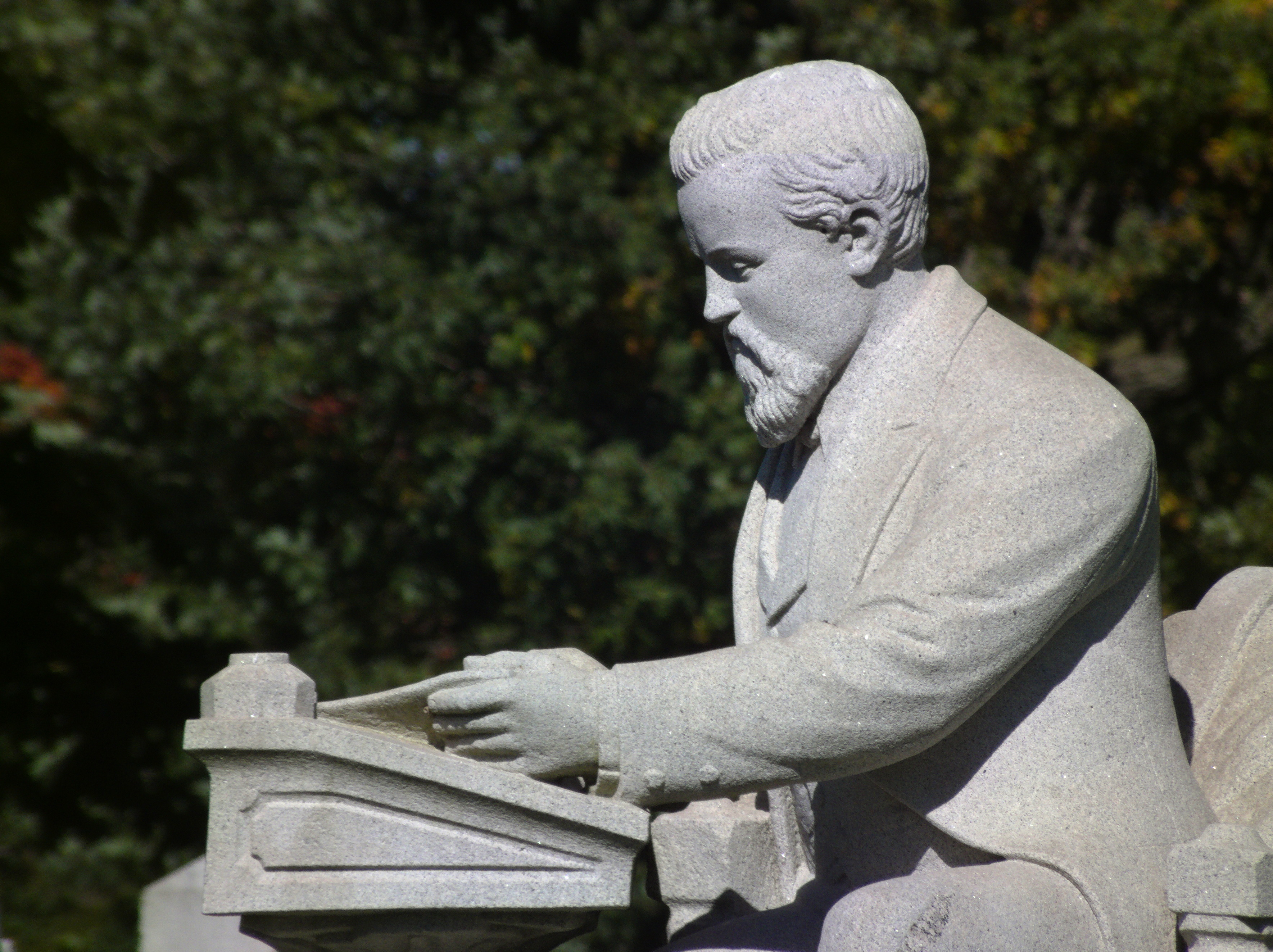
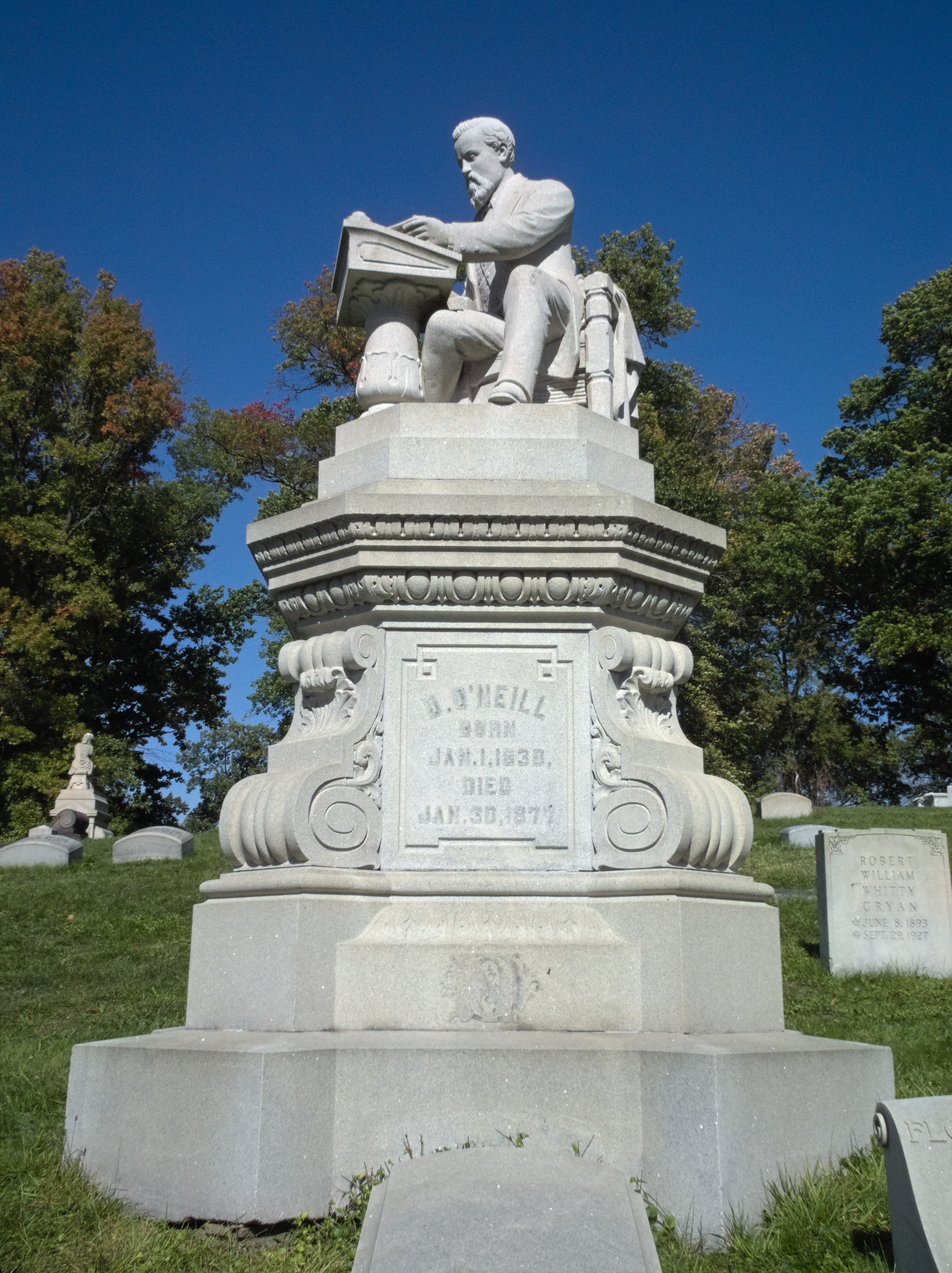
This article on the Daniel O’Neill monument appears at Father Pitt’s Pittsburgh Cemeteries, but he thought his regular readers here might also enjoy seeing the portrait of an important figure in Pittsburgh’s literary history.
An editor’s work is never done. Here is Daniel O’Neill, owner and editor of the Dispatch, still at work 145 years after his death in 1877. Though he died at the young age of 47, he had already built the Dispatch into Pittsburgh’s most respected newspaper, a position it held until the great newspaper massacre of the early 1920s, when paper shortages and rising costs forced hundreds or thousands of papers across the country out of business. Before that there had been at least a dozen English dailies in Pittsburgh, not to mention three in German and several in other languages.
The monument itself is a harmoniously eclectic mix of styles in the Victorian manner: classical elements dominate, but Mr. O’Neill’s desk rests on an Egyptian pedestal.